


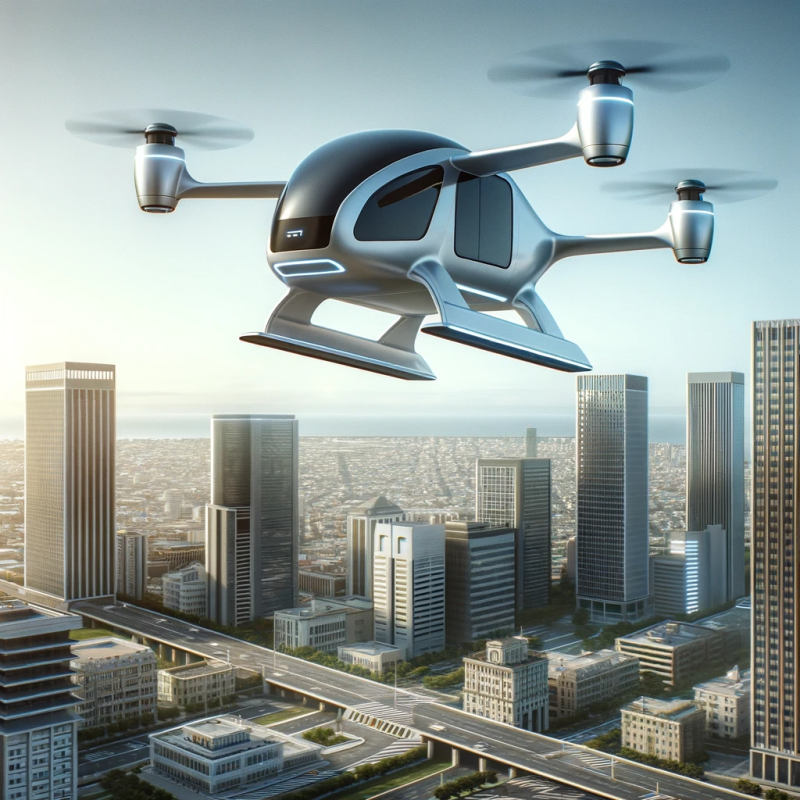
In the burgeoning field of urban air mobility, the integration of Artificial Intelligence (AI) into eVTOLs (Electric Vertical Take-Off and Landing vehicles) heralds a transformative era. These aircraft, poised to redefine urban transportation, are not mere figments of futuristic imagination but tangible manifestations of advanced technology. AI’s role is multifaceted, underpinning crucial aspects such as navigation, obstacle avoidance, and split-second decision making.

14
Jan
Jan
Soaring into the Future: Wisk Aero’s Revolutionary Urban Air Mobility
In a groundbreaking development, Wisk Aero, in collaboration with aerospace titan Boeing, has recently unveiled its updated Concept of Operations (ConOps) for Uncrewed Urban Air Mobility (UAM), charting a new course in aviation history. This pioneering document delineates the transition from crewed to uncrewed flights, focusing on integrating autonomous, electric aircraft into urban landscapes with an eye on safety, infrastructure, and airspace integration.

13
Jan
Jan
The global landscape of personal and commercial transportation is on the cusp of a revolutionary change with the advent of electric vertical takeoff and landing (eVTOL) vehicles and VTOLs. This transformative technology is not only reshaping the concept of urban mobility but also promising an eco-friendly future in aviation.

11
Jan
Jan
In an age where the boundaries of technology and transportation are constantly being redrawn, Suzuki Motor Corporation and SkyDrive Inc. have emerged as heralds of a new era in aviation. This collaboration, which began in March 2022, has culminated in the development of the SD-05, a flying car poised to revolutionize urban mobility.

10
Jan
Jan
In the ever-evolving world of aviation, a one-size-fits-all approach to motor design is rapidly becoming a relic of the past. The divergent needs of modern aircraft such as the Airlander 10 airship and urban eVTOL (Electric Vertical Take-Off and Landing) vehicles illustrate this shift vividly.
09
Jan
Jan
Urban Air Mobility (UAM) is evolving into a cornerstone of modern transportation, promising a future where air taxis and ride-sharing services soar above congested city streets. As we stand on the brink of this aerial revolution, it’s crucial to delve into the communication systems that will underpin its safety and efficiency.