


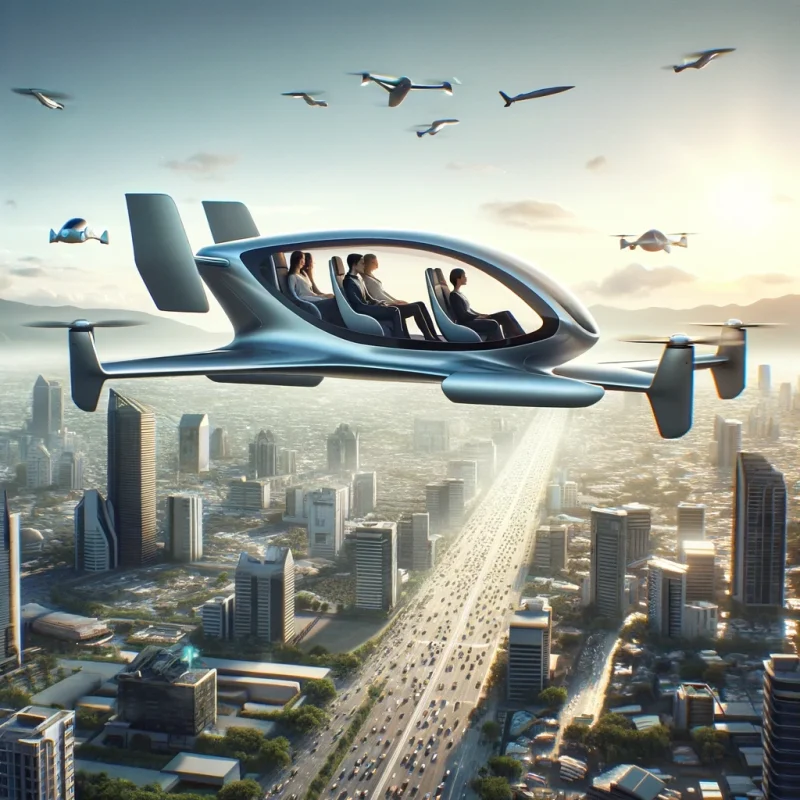
Unlike traditional aircraft, eVTOLs are designed to operate in densely populated areas, offering a swift, environmentally friendly alternative to road transport. Their impact on infrastructure is profound, encompassing everything from airspace management to the construction of vertiports and the integration into existing urban landscapes.
19
Feb
Feb
The future of urban air mobility, particularly with electric Vertical Takeoff and Landing (eVTOL) vehicles and flying cars, is on the brink of transforming transportation as we know it. Enthusiasm for this technology is not unfounded, given the rapid advancements in battery technology and electric propulsion systems, as well as increasing interest from companies and governments worldwide.

16
Feb
Feb
Electric Vertical Take-Off and Landing (eVTOL) vehicles represent a cutting-edge frontier in the quest for sustainable urban mobility. By harnessing electric propulsion, eVTOLs offer a tantalizing glimpse into a future where the carbon footprint of short-haul air travel and urban commutes is significantly reduced.

10
Feb
Feb
The current state of self-direction, or autonomous navigation, in eVTOLs is a fascinating convergence of aerospace engineering, robotics, and artificial intelligence (AI). The promise of autonomous eVTOLs is not just a reduction in urban congestion but a fundamental change in how we perceive distance and personal mobility.

03
Feb
Feb
In a significant leap towards sustainable regional air travel, Skyfly and AeroVolt have announced a partnership set to revolutionize the urban air mobility (UAM) landscape in the UK. This collaboration aims to launch electric Vertical Take-Off and Landing (eVTOL) flights between airfields starting in 2024, marking a critical step forward in integrating green technology with aviation infrastructure.

31
Jan
Jan
Sirius Aviation, hailing from Switzerland, is at the forefront of integrating fuel cell technology into electric eVTOLs, aiming for maximal ecological sustainability. The company promises that these aircraft will operate without any emissions and minimize environmental impact during their operation, while also delivering exceptional comfort and impressive travel range.