


In the burgeoning field of urban air mobility, the integration of Artificial Intelligence (AI) into eVTOLs (Electric Vertical Take-Off and Landing vehicles) heralds a transformative era. These aircraft, poised to redefine urban transportation, are not mere figments of futuristic imagination but tangible manifestations of advanced technology. AI’s role is multifaceted, underpinning crucial aspects such as navigation, obstacle avoidance, and split-second decision making.
29
Aug
Aug
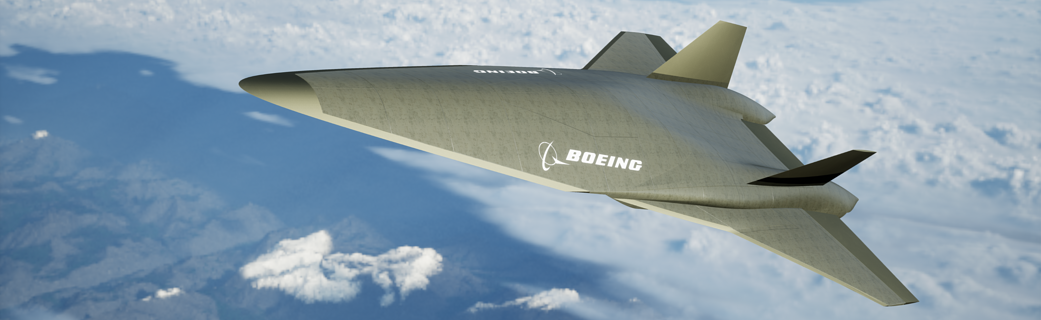
Imagine soaring from New York to London in less time than it takes to finish an average movie. NASA’s recent groundbreaking venture is aimed at revolutionizing transatlantic travel. They’ve embarked on the creation of a supersonic passenger jet that boasts a blistering top speed of Mach 4 (approximately 4,900 km/h). To put this in perspective, this not only doubles Concorde’s impressive Mach 2 (2,450 km/h) speed but also outpaces the famed SR-71 Blackbird spy plane that had a design speed of Mach 3.2 (3,920 km/h).

19
Aug
Aug
The PIBOT project under the auspices of KAIST (Korea Advanced Institute of Science & Technology) has stirred global attention, as it promises a humanoid machine capable of handling intricate aviation tasks. These human-like robots might be the co-pilots of our future.

25
Jul
Jul
China’s push for hypersonic advancement reaches a new peak with the unveiling of the JF-22, an impressive hypersonic wind tunnel. The mere existence of this colossal structure underscores China’s anticipation of a future dominated by hypersonic devices, poised for both civil and military applications.

24
Jun
Jun
Airbus, a leading global player in the aerospace sector, has launched a revolutionary step in airplane automation. The company’s experimentation with an Airbus A350-1000 aircraft has produced a system that doesn’t merely control the plane, but communicates in human speech with air traffic controllers. The project, termed DragonFly, has propelled Airbus into a new era of technology and has transformed the traditional understanding of air travel.

06
Jun
Jun
Navigating the dawn of a fresh chapter in aviation, Airbus recently shared its audacious plans for transforming air travel by 2035 with the unveiling of its Airspace Cabin Vision 2035+ concept. This strategic blueprint paints a picture of future aircrafts as the epitome of innovation and sustainable design. Let’s take a closer look at what this evolution in flight might mean for travelers and the planet alike.