


The Federal Aviation Administration (FAA) in the United States and the European Union Aviation Safety Agency (EASA) in Europe are at the forefront of developing comprehensive regulatory frameworks for eVTOLs. These agencies are working tirelessly to strike a balance between fostering innovation and maintaining the stringent safety standards that have made commercial aviation one of the safest modes of transport.

11
Jun
Jun
On June 6, Boeing’s Starliner spacecraft successfully docked at the International Space Station (ISS) with two NASA astronauts, Sunita Williams and Barry Wilmore, aboard. This event marked a significant milestone in the Crew Flight Test (CFT) mission. Williams and Wilmore will spend a week aboard the ISS before returning to Earth in the Starliner. If this test mission proves successful, the Starliner will become a regular transportation vessel for astronauts heading to the ISS.

09
Jun
Jun
Traveling in a Boeing aircraft is routine on Earth, but the recent journey of two astronauts to the International Space Station (ISS) marks a historic first for the American aerospace giant.

16
Jan
Jan
NASA, in collaboration with Lockheed Martin, recently showcased a groundbreaking development in aviation: the X-59 Quiet Supersonic Technology (Quesst) jet. This aircraft, unveiled with much anticipation, is not just another supersonic plane; it’s an innovative leap forward in overcoming one of aviation’s long-standing challenges—the sonic boom.
29
Aug
Aug
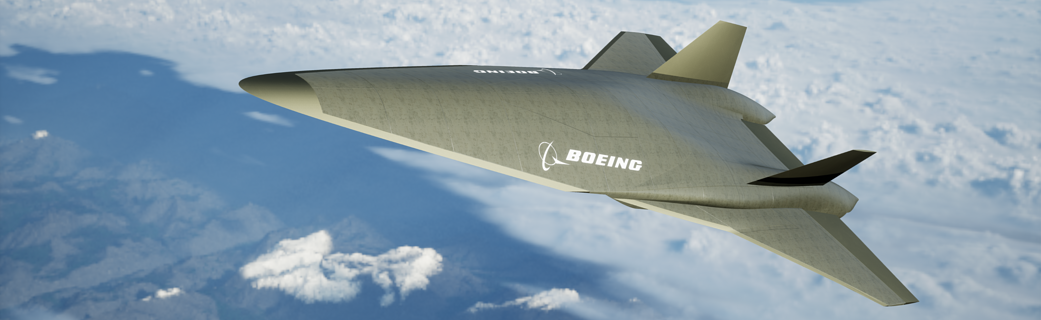
Imagine soaring from New York to London in less time than it takes to finish an average movie. NASA’s recent groundbreaking venture is aimed at revolutionizing transatlantic travel. They’ve embarked on the creation of a supersonic passenger jet that boasts a blistering top speed of Mach 4 (approximately 4,900 km/h). To put this in perspective, this not only doubles Concorde’s impressive Mach 2 (2,450 km/h) speed but also outpaces the famed SR-71 Blackbird spy plane that had a design speed of Mach 3.2 (3,920 km/h).

26
Aug
Aug
The aviation industry, a major player in global CO2 emissions at approximately 2.4 percent, has long grappled with the challenge of going electric. It’s an essential move, considering the escalating need to address climate change. Euronews highlights this global push towards electrification as both a challenge and an opportunity.