


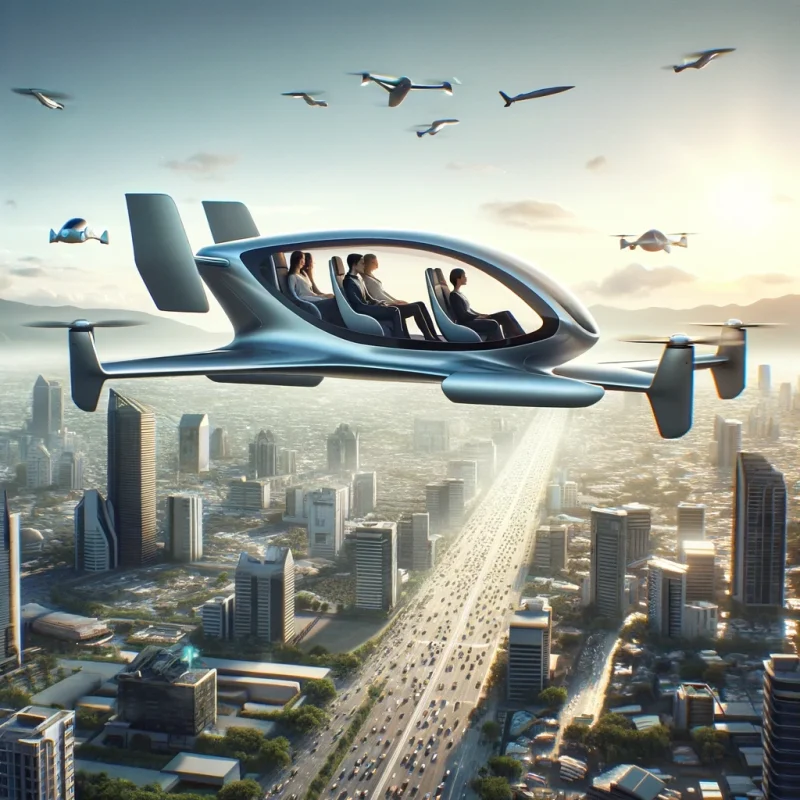
This niche, once relegated to the realms of science fiction, is now on the cusp of becoming a tangible component of our transportation ecosystem. As these aerial vehicles prepare to take to the skies, their growth rate, both in terms of technology and production, reveals a fascinating journey of innovation, challenges, and potential societal impacts.
19
Feb
Feb
The future of urban air mobility, particularly with electric Vertical Takeoff and Landing (eVTOL) vehicles and flying cars, is on the brink of transforming transportation as we know it. Enthusiasm for this technology is not unfounded, given the rapid advancements in battery technology and electric propulsion systems, as well as increasing interest from companies and governments worldwide.

12
Feb
Feb
The emergence of electric vertical take-off and landing (eVTOL) vehicles and flying cars represents a significant leap forward in transportation technology, merging the convenience of aviation with the sustainability of electric propulsion. At the heart of these innovative vehicles lies the electric motor, a component whose design and technology play a pivotal role in enhancing their efficiency and feasibility.

23
Aug
Aug
On 26 June, the world witnessed a leap into the future when the Chinese automotive giant, GAC, pulled the curtains off its latest innovation: the GOVE. This isn’t just another electric vehicle; it’s a harmonious blend of drone and car.
- 1
- 2