


California-based Alef Aeronautics has captured headlines with its Model A, a revolutionary electric vertical take-off and landing (eVTOL) vehicle. This article delves into the Model A’s potential to disrupt urban mobility, while acknowledging the technical and regulatory hurdles it faces.

05
Mar
Mar
The emerging electric Vertical Takeoff and Landing (eVTOL) and flying car industry is on the brink of revolutionizing urban mobility, offering a promising solution to the perennial problems of traffic congestion, air pollution, and long commute times. However, manufacturers in this nascent sector face a myriad of business, strategic, and safety challenges that must be navigated to secure a strong market position.

04
Mar
Mar
Electric Vertical Take-Off and Landing (eVTOL) aircraft are rapidly emerging as a transformative technology in the aviation sector, offering unique capabilities and advantages for emergency response and public service operations. These innovative aircraft, powered by electricity and capable of vertical take-offs and landings, present a new frontier for rapid, efficient, and environmentally friendly emergency services.

28
Feb
Feb
In a landmark move for aviation technology, CycloTech, an Austrian pioneer in innovative flight propulsion technology, has announced a successful 20 million Euro investment, marking a significant milestone in the development of its groundbreaking propulsion system. This investment, contributed by Breeze Invest and Konos Holding, underscores the industry’s confidence in CycloTech’s vision and its potential to redefine the future of air mobility.

28
Feb
Feb
Unlike traditional aircraft, eVTOLs are designed to operate in densely populated areas, offering a swift, environmentally friendly alternative to road transport. Their impact on infrastructure is profound, encompassing everything from airspace management to the construction of vertiports and the integration into existing urban landscapes.
27
Feb
Feb
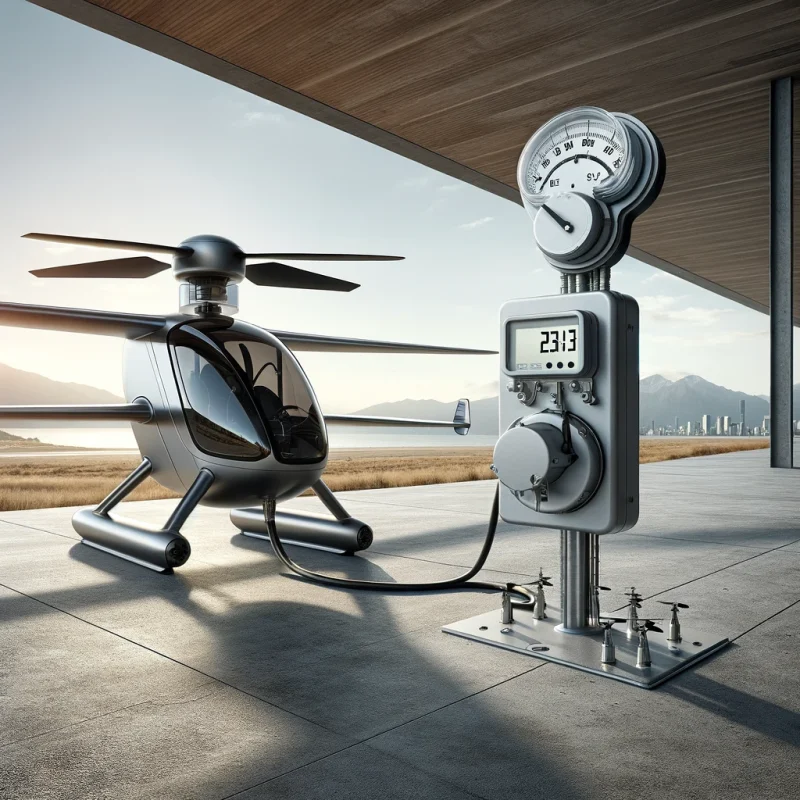
Typically, the energy appetite of an eVTOL ranges between 200 to 300 watt-hours per kilometre (Wh/km). This consumption is influenced by a myriad of factors including the design architecture of the vehicle, its cruising altitude, velocity, and the weight it carries. When juxtaposed with electric cars, which sip energy at a rate of about 150 Wh/km, the stark contrast underscores the more intensive energy needs of aerial travel.