


The development of combat drones represents one of the most significant technological and strategic shifts in modern military doctrine. Over the past decade, Unmanned Combat Aerial Vehicles (UCAVs) have evolved from auxiliary intelligence-gathering tools into central components of offensive and defensive operations. In the United States, this transformation is driven by a combination of geopolitical imperatives, advancements in artificial intelligence, and increasing demands for operational efficiency and force protection.
This analysis focuses on the trajectory of combat drone development in the U.S. region from 2020 onward. It explores the institutional, technological, and economic frameworks that underpin this evolution, including major defense programs, government policies, public-private collaborations, and market dynamics. Particular attention is paid to autonomous weapon systems, swarm technologies, and the growing convergence between civilian urban air mobility (UAM) and military-grade UAV innovation.
The objective of this report is to provide a comprehensive, data-driven assessment of the current landscape and future outlook for U.S. combat drone capabilities. By systematically examining the investments, programs, and technologies shaping this field, the analysis seeks to uncover actionable insights for defense stakeholders, technology developers, and policy planners.
The methodological approach combines qualitative review and quantitative modeling, drawing on primary sources such as U.S. Department of Defense budget reports, defense industry briefings, and authoritative third-party research. Emphasis is placed on transparency and critical evaluation, including an explicit account of the limitations of available data and the assumptions embedded in forward-looking assessments.
This report aims not only to document trends but to evaluate their strategic implications especially in the context of emerging global threats, airspace regulation, and ethical considerations related to autonomous weapons deployment.
📚 Related Articles
A US Startup Will Start Producing Its Own Flying Car This Year
This article discusses Alef Aeronautics’ innovative approach to flying car design, featuring hidden rotors for vertical takeoff and landing, seamlessly integrating road and air travel.The Current State of Vertiport Construction and Development: A Gateway to Urban Air Mobility
An analysis of the early-stage development of vertiports and their potential to revolutionize urban mobility by reducing congestion and introducing sustainable transport options.The Future of Urban Air Mobility: UAE’s Pioneering Initiative
Explores the UAE’s ambitious plans to establish air corridors for piloted and autonomous air taxis, positioning the nation as a leader in aerial mobility solutions.Toyota’s First Successful Flying Car Test Flight: A Leap into the Future of Mobility
Details Toyota and Joby’s successful eVTOL test flight, highlighting its potential to transform urban transportation by reducing congestion and environmental impact.Regional Approaches to Urban Air Mobility: Diverging Strategies Across Asia, Europe, and North America
Examines the varied approaches to urban air mobility, from air taxis to regional solutions connecting cities with suburbs.Germany’s Aviation Industry in Turbulence: The Rise and Fall of Air Taxis
Analyzes the challenges faced by Germany’s air taxi industry, focusing on the struggles of startups like Lilium and Volocopter.The Future of Urban Air Mobility: Flying Taxis
Discusses the potential of eVTOLs to transform urban commutes by significantly reducing travel times and alleviating traffic congestion.Airbus Reassesses Electric Air Taxi Development
Reports on Airbus Helicopters’ suspension of the CityAirbus NextGen project, highlighting the challenges in bringing eVTOL aircraft to market.The Mass-Produced Flying Car Is Coming
Explores Alef Aeronautics’ Model A, a flying car designed with concealed propellers for vertical takeoff, aiming for mass production.EHang: Record Growth and Breakthrough in Urban Air Mobility
Analyzes EHang’s financial performance, noting record revenues and delivery volumes driven by increased sales of the EH216 series eVTOL aircraft.
By 2025, drones had become ubiquitous in U.S. military operations, conducting intelligence, surveillance, reconnaissance (ISR) and precision strike missions across the globe. High-profile events underscored their strategic and political significance – for example, a U.S. drone strike eliminated a top insurgent leader in early 2020, sparking international debate on sovereignty and the rules of engagement.
Meanwhile, domestically and internationally, ethical and legal concerns about drone warfare persist, especially regarding civilian casualties and autonomous targeting. Policymakers grapple with how to maintain transparency and accountability in drone strikes to address these social concerns, as studies call for clearer oversight and adherence to international law.
Economic and Political Relevance: The combat drone sector has rapidly grown into a multi-billion dollar industry, driving innovation in aerospace and artificial intelligence. The global military drone market was about $14.1 billion in 2023 and is projected to swell to $47 billion by 2032, more than tripling in size.
The U.S. defense industry – including major firms and new tech startups – is heavily invested in UAV development, seeing drones as both a lucrative market and a linchpin of future military capability. Politically, the U.S. government views drones as critical for maintaining a military edge, especially amid great-power competition.
Defense leaders emphasize that unmanned systems reduce risk to personnel and enable new tactics: Drones can loiter over targets for hours, strike precisely, and operate in swarms or “teaming” formations that overwhelm adversaries.
In an era of strategic competition, U.S. officials also cite the need to outpace rival powers – China, for instance, has rapidly advanced its own armed drones and exports them widely, challenging U.S. dominance.
This competitive pressure has economic and security dimensions, pushing the U.S. to accelerate drone innovation and to reconsider export restrictions so allies can field U.S.-made drones instead of turning to foreign suppliers.
Purpose and Scope: This analysis provides an in-depth examination of U.S. combat drone development from 2020 onward, evaluating how technology, programs, and policies have evolved in the past five years.
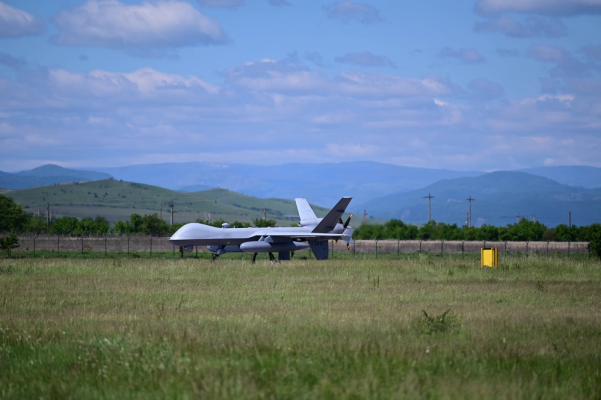
We focus on unmanned aerial systems used for combat or combat support in the U.S. military – ranging from high-end armed drones like the MQ-9 Reaper to experimental autonomous “wingmen” and the proliferation of smaller battlefield drones.
Key issues addressed include: (1) major trends in drone technology since 2020 (such as greater autonomy and use of artificial intelligence); (2) changes in procurement and funding for drones, and how the Services are integrating these systems; (3) shifts in defense policy and export controls related to UAVs; (4) the evolving industry landscape and emergence of new players; and (5) the U.S. position in the international context, including collaboration with allies and competition with adversaries.
By concentrating on developments post-2020, we aim to illuminate recent breakthroughs (for example, drone swarming and “loyal wingman” projects) and current challenges (such as counter-drone defenses and interoperability issues) that will shape the next generation of U.S. combat drones.
Methodological framework
Approach: Our analysis employs a mixed-methods approach, combining quantitative data collection with qualitative assessments. We conducted a thorough literature and data review, drawing on verified, credible sources including U.S. government reports (e.g. Congressional Research Service analyses, Department of Defense budget documents), official military statements, defense industry reports, and expert commentary from think-tanks and academic publications.
For quantitative insights, we extracted data on budgets, production numbers, and technological performance from official releases and databases.
For example, we reviewed U.S. Air Force and Army budget justifications to track funding trends for unmanned systems, and we compiled procurement program milestones from FY2020–FY2025 defense budgets (noting when new drone programs entered production or legacy systems were retired).
We also incorporated statistics from reputable research – for instance, market forecasts for the drone industry and counts of drone proliferation globally – to contextualize U.S. developments within broader trends. All data points are cross-verified across multiple reputable sources to ensure accuracy and currency.
Analytical Models and Techniques: We structured the analysis using a combination of trend analysis and a PEST framework (examining Political, Economic, Social, and Technological factors) to capture the multi-dimensional impact of drone developments.
Technological trends were mapped through timeline analysis (identifying key milestones from 2020 to 2025) and, where possible, quantitative trend plotting (such as the annual number of drones procured or R&D dollars invested).
Policy and strategic aspects were analyzed qualitatively using content analysis of strategy documents (e.g. the 2022 National Defense Strategy’s references to unmanned systems) and legislative changes (like export policy updates).
We also employed comparative analysis: comparing current data to historical benchmarks (e.g. mishap rates of unmanned vs manned aircraft, pre-2020 vs post-2020 funding levels) and comparing U.S. metrics to allies and adversaries (such as China’s drone fleet estimates) to gauge U.S. relative standing.
This combination of quantitative charts and qualitative discussion allows us to identify not just what changes have occurred (e.g. a 20% increase in spending on drones), but why – linking numbers to strategic drivers and outcomes.
Sources and Data Transparency: Wherever possible, we used primary sources (official data or direct quotes from defense officials) to ground our analysis in verified information. For example, details on current U.S. drone programs are taken from Congressional Research Service (CRS) report R47067, which provides an authoritative inventory of programs and issues, and from official press releases and budget documents.
Industry developments and market data are drawn from established defense news outlets (such as Defense News and Jane’s Defence) and research institutions (e.g. Center for Strategic and International Studies) known for rigorous vetting.
Each factual claim in this report is accompanied by a citation to its source, enabling traceability. In the data presentation, we include tables and figures to transparently show the underlying numbers behind our analysis (for instance, a table summarizing key drone programs and their status, with sources noted).
We also explicitly distinguish between hard data and analyst interpretations. When we present a professional hypothesis or projection (such as the likely impact of a new drone technology on warfare), it is clearly marked as such and is informed by patterns in the data or expert consensus, rather than asserted as fact.
Limitations: Despite extensive data gathering, some limitations must be acknowledged. First, classified programs and information gaps pose a challenge – several cutting-edge U.S. drone efforts (like the RQ-180 stealth UAV) are shrouded in secrecy, meaning publicly available data may underrepresent the full scale of U.S. capabilities.
We have noted in the text where such blind spots exist. Second, there is potential bias in sources: industry reports might be optimistic about market growth, and official statements may emphasize successes over failures.
We mitigate this by cross-checking facts across independent sources (e.g. comparing a company’s claims about a drone’s performance with any available test reports or third-party analyses). Third, data on very recent developments (2024–2025) is sometimes provisional – for example, budget figures for FY2025 are requests that might change after Congressional review.
We treat these appropriately (labeling them as requests or plans, not accomplished facts). Additionally, while we include global context, our focus is on the U.S.; we do not exhaustively cover drone developments in every other country, which could be a study in itself. This scope choice means some international data is selective, used mainly to benchmark U.S. progress.
Finally, due to the pace of change in this field, any analysis can become outdated as new events unfold; our cutoff is early 2025, and we highlight expected near-future milestones to provide a forward-looking view. By being transparent about these limitations, we enable the reader to critically interpret the findings with appropriate caution where needed.
Current landscape of U.S. combat drone development (2020–2025)
Autonomy and AI: A defining trend since 2020 is the rapid advancement of drone autonomy and artificial intelligence. The U.S. Air Force and Navy have aggressively pursued AI-driven flight control and decision-making to enable drones that can operate with minimal human intervention.
By 2023, prototype UAVs were flying sophisticated missions autonomously – notably, a Defense Advanced Research Projects Agency (DARPA) program achieved the first AI-to-AI dogfight simulations and even had an AI agent pilot a modified F-16 in live flight, proving that AI can handle complex aerial combat maneuvers.
In practical terms, this means future drones will not just be remote-controlled cameras or missile trucks; they will have onboard “brains” capable of independent tactical execution.
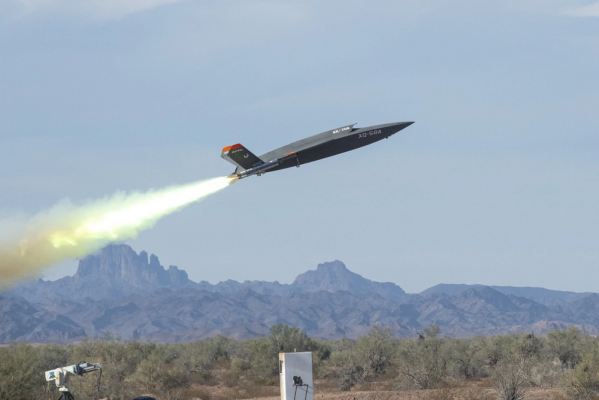
The Air Force’s Skyborg program (launched in 2019) matured through the early 2020s to provide an autonomous control system for new unmanned platforms, and by 2021–2022 it had demonstrated AI pilots flying a Kratos XQ-58A Valkyrie drone in partnership with manned aircraft. These developments feed directly into what the Air Force now calls Collaborative Combat Aircraft (CCA) – armed drones designed to collaborate with human pilots as teammates.
In 2023, Air Force leaders outlined plans to deploy around 1,000 CCAs in the next generation air fleet, signaling an unprecedented scale for autonomous combat drones. Early 2025 saw concrete steps: two CCA prototypes (built by General Atomics and startup Anduril Industries) were unveiled, designated YFQ-42A and YFQ-44A, and slated for flight tests in summer 2025.
They have been even assigned a fighter (“F”) series designation – an symbolic first for U.S. unmanned aircraft – underlining the Air Force’s view that these drones will operate as integral combatants in future wars.
These “loyal wingman” drones leverage AI to perform roles such as scouting ahead of manned fighters, absorbing enemy fire, conducting electronic warfare, or executing coordinated strikes, all while dynamically reacting to battlefield conditions without needing step-by-step human control.
Beyond individual drones, the Pentagon has also explored drone swarming – deploying large numbers of networked UAVs that coordinate their actions using AI. Advances in miniaturization and computing have enabled tests of swarms ranging from small quadcopters to flying wing micro-drones.
The Department of Defense (DoD) demonstrated swarms of over 100 mini-drones in earlier tests and continues R&D in this area, seeing swarms as a way to saturate enemy defenses.
Since 2020, the Army and Navy have run experimental programs (like the Army’s ALE – Air Launched Effects concept and the Navy’s LOCUST project) to deploy multiple small drones from larger platforms (helicopters, ships, etc.) that can autonomously disperse and perform coordinated tasks (such as wide-area surveillance or “swarm attack” on a target).
The technology for true swarming AI is still maturing, but steady progress is evident. An Air Force experimental salvo in 2021 showed that small drones equipped with collaborative software could identify and isolate targets as a group in real time.
Meanwhile, on the defensive side, U.S. research into counter-swarm measures (like high-powered microwaves and electronic jamming tailored to disrupt drone networks) has accelerated, reflecting the expectation that U.S. forces may both use and face swarms in future conflicts.
Enhanced Capabilities – Stealth, Endurance, and Networking: Another major trend is the push to improve drones’ survivability and integration in contested environments. Traditional U.S. combat drones (e.g. the MQ-9 Reaper) are large and slow, suitable for permissive airspace but vulnerable against advanced air defenses. Post-2020 development has thus prioritized stealth features and higher performance in new designs.
The Air Force’s secretive RQ-180 UAV, for example, is a high-altitude stealth reconnaissance drone that reportedly began test flights in the late 2010s and is believed to be entering operational use in this period.
While details are classified, the RQ-180 is designed to penetrate denied airspace and provide ISR where Global Hawks or Reapers cannot survive. Likewise, the B-21 Raider stealth bomber – unveiled in 2022 – is optionally manned, meaning it is being built with the ability to fly unmanned missions in the future.
This indicates the Air Force’s confidence in autonomous control for even the most sensitive long-range strike platforms. The Raider’s inclusion in UAV discussions underscores how the line between “manned” and “unmanned” is blurring; the B-21 could one day operate as a very large drone, or command swarms of smaller drones during missions.
The Navy, for its part, has invested in stealthy carrier-launched drones: although it pivoted its first carrier UAV (the MQ-25) to a tanker role, it gathered significant data from the earlier X-47B stealth drone demonstrator and is expected to pursue a stealthy unmanned combat air vehicle (UCAV) for strike missions off carriers once the MQ-25 is fielded.
Alongside stealth, greater endurance and networking capabilities are being built into new drones. The goal is for drones to seamlessly integrate with the Pentagon’s envisioned “Joint All-Domain” command and control networks. For instance, experimental drones now carry advanced datalinks and can act as airborne nodes or relays.
The December 2020 Valkyrie test (image above) demonstrated an unmanned system sharing a common tactical picture with fighter jets via the Air Force’s Advanced Battle Management System network.
In effect, drones are becoming both sensors and communication hubs in the battlespace, extending connectivity for the force. Technologically, this requires robust anti-jam, encrypted communications and interoperability across platforms.
Much effort since 2020 has gone into hardening drone control links against electronic warfare, given observations from conflicts like Ukraine and Syria where drones can be grounded by signal jamming. Modern U.S. drones now feature anti-jamming GPS and datalinks, and the DoD is experimenting with alternatives like optical/laser communications to control drones even under heavy electronic attack.
Additionally, payload versatility has improved – drones can carry a wider array of sensors and munitions than before. Modular designs allow quick swapping of payloads (cameras, radars, electronic warfare pods, or different missile types) to adapt to mission needs. The Army’s roadmap for its next-generation tactical drones explicitly calls for a Modular Open Systems Approach so that payloads are easily interchangeable and upgradable.
This ensures U.S. drones can evolve quickly with technology (e.g. integrating a new AI-enabled sensor or more efficient engine without a complete redesign). In summary, the post-2020 trajectory of U.S. drone capabilities has been toward smarter, stealthier, and more networked systems – drones that can evade detection, think for themselves (within human-defined parameters), and act as force multipliers alongside other military assets rather than just remote ISR platforms.
Programs and procurement developments
The years 2020–2025 have been a transitional period for U.S. drone programs. The military’s legacy fleet of large drones (like the MQ-1 Predator, retired in 2018, and the MQ-9 Reaper) continues to operate extensively, but several new programs entered development or procurement to refresh and diversify the drone inventory.
Table 1 provides an overview of major U.S. combat-relevant drone systems and their status as of 2024, highlighting how the focus is shifting toward next-generation technologies and new mission roles.
Table 1. Key U.S. Military Combat Drone Programs (Status Post-2020)
| Program (UAV) | Service & Role | Status (2024) | Recent Developments (2020–2024) |
|---|---|---|---|
| MQ-9 Reaper | USAF – Medium-altitude long-endurance (MALE) armed ISR drone | In service (first fielded mid-2000s; ~300+ airframes) Production winding down by mid-2020s | Workhorse for counterterrorism and ISR; used in Middle East & Africa. USAF plans to eventually replace or augment with advanced UAVs – no direct successor in program of record yet, but exploring MQ-Next concept and CCAs. |
| MQ-1C Gray Eagle | Army – MALE armed ISR drone (extended-range Predator variant) | In service (fielded ~2009; ~165 airframes) | Provides organic ISR/strike to Army brigades. Continues upgrades (comms, payloads). Flew ~494,000 hours in FY2019 alone, showing heavy use. Will be complemented (not immediately replaced) by new tactical drones (FTUAS) with VTOL capability. |
| RQ-4 Global Hawk | USAF – High-altitude long-endurance (HALE) unarmed surveillance drone | In service (Block 40 models active; early Block 20/30 retired by 2022) | Provides broad-area strategic ISR (near-peer monitoring, large-area mapping). Due to vulnerability in contested airspace and high cost, Air Force retired older RQ-4 variants. Surveillance mission expected to shift to stealthier assets (e.g., RQ-180) for high-threat environments. |
| MQ-4C Triton | Navy – HALE unarmed maritime surveillance drone (naval Global Hawk variant) | In service (early build); Full fleet in procurement | Multi-sensor maritime patrol UAV. Reached early operational capability in Pacific. Procurement of 68 total Tritons planned for broad ocean surveillance. Delivers persistent ISR to complement manned P-8 Poseidon patrol aircraft. |
| MQ-25 Stingray | Navy – Carrier-based unmanned aerial refueling tanker (with secondary ISR role) | In development/testing (first flight 2019; procurement from FY2023 started) | The first operational carrier-launched UAV. Boeing’s MQ-25 will refuel Navy fighters in flight, extending carrier air wing range. Also provides ISR from carriers. 76 MQ-25s planned at ~$121M each. On track for carrier deployment mid-2020s; integration testing with carrier decks ongoing. |
| RQ-170 Sentinel | USAF (operated with CIA) – Mid-altitude stealth reconnaissance drone | Operational (fielded ~2007; number in service classified) | Used for clandestine surveillance (famously over Iran/Afghanistan). Stealthy flying-wing design allows ISR in moderately defended airspace. One was captured in Iran (2011), proving its existence. Still in use, but little publicly reported; likely informing newer stealth UAV designs like RQ-180. |
| B-21 Raider | USAF – Next-generation stealth bomber, optionally manned capability | In testing (rollout Dec 2022; first flight expected 2023/24) | While primarily a manned bomber, B-21 is designed with flexibility to operate unmanned. Will carry nuclear or conventional payloads. Represents cutting-edge stealth and networking; could potentially control drone wingmen. Part of USAF’s post-2025 force, with at least 100 planned. |
| RQ-180 (designation unconfirmed) | USAF – Stealth high-altitude surveillance UAV (next-gen recon) | In development/testing (first flight ~2013; status highly classified) | Believed to be a large stealth UAV to replace/supplement Global Hawk for ISR in contested airspace. Reports suggest it operates from U.S. bases in Guam and elsewhere for intelligence missions. Though secret, likely nearing initial operational capability in the mid-2020s, giving the U.S. unseen eyes deep in adversary territory. |
| XQ-58A Valkyrie & CCA drones | USAF (Air Force Research Lab & partners) – “Loyal Wingman” armed drone prototypes | Prototype testing (XQ-58 flights since 2019; USAF CCA prototypes from 2024) | Demonstrator for low-cost, high-performance drones to team with fighters. The Kratos XQ-58A proved concept of runway-independent launch and autonomy. By 2024, USAF awarded contracts to build improved prototypes (General Atomics “YFQ-42” & Anduril “YFQ-44”). These will test AI pilots and formation tactics with F-35s and future jets. Aim: field expendable wingmen to augment firepower and protection for manned crews. |
| Future Tactical UAS (FTUAS) | Army – Brigade-level tactical drone (mid-size, expeditionary) | Prototyping (Increment 2 competition during 2023–2024; first unit equip in 2025) | Will replace the RQ-7 Shadow for Army ground units. Key requirements: Vertical Takeoff and Landing (VTOL) for runway independence, quieter operation, and open modular architecture. After trials, Army chose 5 vendors in 2023 (e.g. AeroVironment’s Jump 20) to refine designs. Expected to field systems from 2025 onward, giving troops a more flexible ISR/targeting drone that can be deployed quickly in the field. |
| Small UAS & Loitering Munitions (e.g. Switchblade 300/600, ALTIUS, Quadcopters) | All services (and SOCOM) – portable recon and strike drones, “attritable” assets | Rapid acquisition & fielding (ongoing programs and purchases each year) | Huge growth area post-2020, driven by conflicts like Ukraine. The U.S. has invested in loitering munitions (kamikaze drones) for infantry units (e.g. Switchblade drones were delivered for special operations and to Ukraine). The DoD stood up the “Replicator” initiative in 2023 – a $1B program to field thousands of small, smart, cheap drones across domains. Also, the Army’s Short Range Reconnaissance program is buying commercial-style quadcopters (e.g. 540 systems requested in FY25). These small UAS provide scouting and precision strike at platoon level, and can be lost in large numbers without breaking the bank (attritable). Emphasis is on quick adoption of commercial tech, secure communications (Blue UAS program validates non-Chinese drones for use), and swarm tactics for future use. |
Sources: Compiled from CRS Report R47067, official DoD program fact sheets, and defense news reporting.
The table above illustrates that U.S. drone programs are diversifying. The Air Force and Navy are introducing entirely new categories of UAVs (carrier-based refuelers, autonomous wingmen), while the Army is overhauling its tactical drones for ground forces. A few additional observations about procurement trends post-2020:
Shifting Procurement Priorities: The Air Force, after two decades of buying Reapers, has started tapering off MQ-9 purchases in favor of investing in next-gen systems. In FY2022 the Air Force signaled it would stop procuring Reapers by FY2024 and focus on experimenting with advanced drones and networking them with fighters.
This led to a gap (noted by Congress) of a “lack of acknowledged follow-on program” to the MQ-9. That gap is now being filled by the CCA development efforts described, though those are still experimental. The Army similarly decided not to buy more MQ-1C Gray Eagles beyond current units, pouring resources instead into FTUAS and small drones for its brigades.
The Navy, interestingly, chose to fulfill a support role (aerial refueling) as its first carrier drone venture (MQ-25) after canceling a stealth attack drone program in 2016. This indicates a cautious step-by-step approach: prove integration of a simpler UAV on carriers first (the MQ-25 tanker), then later add strike-capable drones using the lessons learned.
The MQ-25’s progress since 2020 – including successful deck handling trials and refueling tests with F/A-18s – has been a major milestone, giving the Navy confidence to consider a future combat UAV off carriers.
Shifting from Legacy to Future Systems: The retirement of older drones is freeing funds for modern ones. As noted, the Air Force retired the Block 20 and 30 Global Hawks by 2022, as these earlier models (with less capable sensors) were deemed less useful against near-peer adversaries.
Some savings are redirected to classified programs like the RQ-180. Similarly, the Marine Corps retired its small fleet of RQ-7 Shadow drones and is instead acquiring MQ-9 Reapers (a number of MQ-9A were purchased in 2022–2023 for the Marines) to provide longer-range ISR in line with the Marines’ new island-hopping operational concepts.
This marks the Marines’ first foray into Group 5 large drones, illustrating how unmanned systems are permeating all branches. By 2024, the U.S. Marine Corps had two MQ-9A Reapers continuously forward-deployed to the Indo-Pacific for surveillance, showing the expeditionary value of drones for monitoring vast regions with a light footprint.
Production and Industrial Base: The requirement for drones in larger numbers, particularly smaller attritable ones, is influencing production strategies. The DoD’s 2023 Replicator initiative (noted in the table) is explicitly aimed at fielding “small, smart, cheap, and many” unmanned systems within the next two years.
This initiative is as much about production capacity as about technology – it seeks to leverage commercial manufacturing (including drones, robotics, 3D printing, etc.) to churn out thousands of drones affordably, something traditional defense acquisition isn’t optimized for. It shows the U.S. trying to close the quantity gap; while U.S. drones have been technologically superior, in a potential conflict (e.g. with China) the ability to deploy swarms of hundreds or thousands of expendable drones could be decisive.
Replicator is channeling approximately $1 billion to jump-start this capacity, contracting dozens of companies for various drone types and enablers. By late 2024, over 30 contracts had been awarded under Replicator across hardware and software, involving 50+ subcontractors to scale up production of different unmanned platforms. This is a noteworthy procurement shift – embracing non-traditional vendors and rapid prototyping in lieu of sole reliance on a few prime contractors.
In summary, U.S. drone procurement from 2020 onward reflects a balancing act: sustaining critical existing capabilities (Reapers, Gray Eagles, etc. still perform daily missions worldwide) while rapidly infusing new technologies and expanding the fleet in new directions (carrier ops, autonomous wingmen, and mass-produced mini-drones).
The Pentagon’s budget requests in these years back this up. In FY2024, the DoD requested $10.95 billion for unmanned and autonomous systems development and procurement – approximately $1 billion higher than the previous year – even as overall defense budgets remained flat, indicating unmanned systems are a high priority growth area.
Defense policy and funding landscape
Strategic Guidance: U.S. defense strategy documents and leaders’ statements since 2020 consistently highlight unmanned systems as essential to future force design. The 2022 National Defense Strategy (unclassified summary) called for “innovative concepts of operation” and pointed to distributed operations and autonomous systems as key to countering high-end threats. In practice, this translated into the military services each crafting plans to integrate more drones.
The Air Force, for example, under Secretary Frank Kendall’s leadership, adopted the mantra of “5th-generation minus” for drones – meaning UAVs that can operate in coordination with fifth-gen stealth fighters but are cheaper/expendable. Kendall publicly set a goal for about two unmanned wingmen per crewed fighter in the future force, which roughly led to the ~1,000 CCA figure for the mid-2030s.
The Army’s top leadership also emphasized drones in new operating concepts: Army Chief of Staff Gen. Randy A. George noted in 2024 that battlefield lessons from Ukraine show “aerial reconnaissance has fundamentally changed” and that sensors and weapons on unmanned platforms are now “more ubiquitous, further reaching and more inexpensive than ever”.
He directed the Army to accelerate innovation, procurement and fielding of modern unmanned aircraft systems, citing specifically the FTUAS program, “launched effects” (drone swarms or loitering munitions), and even adapting commercial small drones for military use.
This reflects a significant policy shift: traditionally, the U.S. military relied on purpose-built military drones; now it’s rapidly incorporating dual-use commercial drones to outfit units, recognizing that inexpensive off-the-shelf UAVs (even hobbyist-style quadcopters) have proven their worth in recent conflicts.
Funding Priorities: Budget trends show robust support for drone-related programs. Despite overall defense budgets flattening, unmanned systems funding has generally seen increases each year since 2020.
In FY2023 and FY2024, Congress largely approved the Pentagon’s requests to fund new drone initiatives – for instance, allocating full funding for the Army’s FTUAS prototypes and adding money to accelerate the Navy’s unmanned surface and underwater vehicles (which, while not aerial drones, form part of the broader unmanned shift).
The Air Force in FY2023 received funding to start CCA prototyping in earnest, and by FY2024 it had budget lines for at least two CCA prototype programs (as evidenced by the YFQ-42A and YFQ-44A in development). At the same time, the DoD increased investment in counter-UAS (C-UAS) capabilities, acknowledging that as drones proliferate, U.S. forces and the homeland face greater risk from adversary drones.
Notably, the U.S. Army’s 2025 budget request includes over $500 million specifically for counter-drone programs – such as mobile air-defense lasers, jamming systems, and the Low Altitude Stalking and Strike Ordnance (LASSO) program to defeat small drones.
Congress boosted C-UAS funding in the FY2024 defense appropriations as well, adding $177+ million above the request to accelerate counter-drone defenses and directed-energy systems across the services. This two-pronged spending – on drones and on defenses against them – underscores that unmanned systems are now a central feature of both offense and defense planning.
Export Policy and International Collaboration: A significant policy development in this period was the U.S. government’s July 2020 decision to ease export restrictions on armed drones.
For years, strict adherence to the Missile Technology Control Regime (MTCR) had made it difficult for American companies to sell large UAVs (like the MQ-9 Reaper) to many allies and partners – they were treated akin to cruise missiles under Category I of MTCR, which presumed denial of export.
In 2020 the U.S. reinterpreted these guidelines, effectively reclassifying certain drones with speeds under 800 km/h as Category II systems (less restricted). This policy change, driven by pressure to compete with Chinese and Israeli drone exporters, opened the door for sales of advanced U.S. drones to allies.
Since then, we have seen U.S. allies ordering American drones: e.g., Taiwan, Australia, and several NATO countries moved to procure MQ-9B variants or MQ-9A Reapers, and General Atomics received approvals to market the MQ-9B SkyGuardian (an unarmed maritime patrol variant) to countries in Asia and the Middle East that previously couldn’t access such tech.
U.S. officials argued this would “handicap our partners” no longer, allowing them to field better equipment and interoperate with U.S. forces, while also bolstering the U.S. drone industry.
On the collaborative front, the U.S. has increasingly worked with allies on drone operations and R&D. NATO’s Alliance Ground Surveillance (AGS) program, which became operational in 2020, is a prime example: NATO collectively acquired five RQ-4D Phoenix drones (Global Hawk derivatives) based in Italy, with the U.S. as a major contributor.
These drones allow NATO members to share reconnaissance data, illustrating how U.S. technology underpins allied ISR capabilities. Additionally, American drones are forward deployed in allied countries – for instance, the U.S. Air Force rotates MQ-9 Reaper units to bases in Poland and Romania to support NATO’s eastern flank, and to Japan to bolster Indo-Pacific surveillance. Such deployments not only provide security benefits but also help allies gain familiarity operating alongside drones.
On the R&D side, joint development projects have been fewer (as the U.S. typically pursues its own programs), but there are signs of growing cooperation. Australia’s loyal wingman drone (the Boeing MQ-28 Ghost Bat) was developed domestically but with Boeing’s U.S. expertise; now the U.S. Air Force is evaluating whether that platform could fit into its CCA mix, showing cross-pollination of concepts.
Under the AUKUS security pact, the U.S., UK, and Australia have a technology sharing agenda that includes unmanned systems and AI, potentially leading to co-development of drone swarm or autonomous underwater vehicle technologies.
Moreover, information-sharing agreements have expanded – the U.S. is more readily sharing drone-derived intelligence with allies (e.g. providing real-time video feeds from Reapers to coalition partners in operations against insurgents, or to Ukraine via intermediary platforms).
Operational Doctrine and Integration: The period saw U.S. forces integrating drones more deeply into doctrine and training. The Army’s 2022 Field Manual updates put greater emphasis on multi-domain operations, explicitly calling out the use of unmanned assets to extend situational awareness and create dilemmas for the enemy.
The Navy stood up “Unmanned Surface Vessel Division One” in 2021 for experimental work with unmanned ships; on the aerial side, carrier air wing work-ups started to include MQ-25 surrogates (like using other aircraft to simulate a drone’s carrier landing pattern and operations).
The Air Force Test Pilot School even added curricula for “digital flight test” focusing on autonomous systems. All the services have created high-level offices to coordinate unmanned efforts (e.g., the Navy’s Unmanned Task Force, the Air Force’s new position of Deputy Chief of Staff for AI and autonomous systems), to ensure these projects align with broader needs.
In summary, U.S. defense policy from 2020 on has firmly embraced combat drones as indispensable, backing that stance with concrete funding boosts, organizational changes, and international policy adjustments. Unmanned systems are no longer niche assets; they are central to force planning, from top-level strategy down to unit tactics.
The U.S. is simultaneously pushing technology frontiers (autonomy, stealth) and adapting its policies (export rules, training, alliances) to a world where drones are widespread.
Industry and market dynamics
The accelerated development of U.S. combat drones has been propelled by a dynamic interplay of established defense contractors and newer tech entrants, all vying to deliver the military’s next-generation unmanned needs. Unlike the early 2000s when a single company (General Atomics) dominated U.S. drone production with the Predator/Reaper series, the 2020s feature a much more diverse industry landscape: large aerospace primes, mid-sized defense firms, and Silicon Valley-style startups are all contributing.
Major Defense Contractors: Traditional firms have adapted their portfolios to include advanced drones. General Atomics Aeronautical Systems, Inc. (GA-ASI) remains a key player – it produces the MQ-9 Reaper and its newer variants (like the SeaGuardian and SkyGuardian) and has continued incremental upgrades (enhancing the Reaper’s radar, adding satellite communications bandwidth, etc.).
GA-ASI has also ventured into the attritable drone space, unveiling designs like the “Gambit” series concept in 2022 for jet-powered autonomous drones, and it secured one of the Air Force’s first CCA prototype contracts (the YFQ-42A).
Northrop Grumman has leveraged its legacy of the Global Hawk and X-47B to remain relevant: it builds the MQ-4C Triton for the Navy and was reportedly involved in the secret RQ-180 program. Northrop is also partnering with smaller firms on Army programs (it teamed with Shield AI on a version of the V-Bat drone for FTUAS).
Boeing gained a foothold by winning the Navy’s MQ-25 contract in 2018 and successfully flying the test articles; it also developed the aforementioned MQ-28 Ghost Bat in Australia. Boeing’s experience with autonomous flight control from the MQ-25 effort could position it for future Air Force programs (like a possible armed drone bomber escort).
Lockheed Martin, the largest defense contractor, historically focused on manned fighters and missiles, but it too has invested in unmanned tech – notably, it’s developing advanced drone mission software and exploring UAV concepts to accompany its F-35 fighters (Lockheed’s StarDrive AI pilot software was tested in simulations, and they’ve hinted at a stealthy UAV design under Skunk Works).
While Lockheed hasn’t had a high-profile drone airframe win in recent years, it remains involved via payloads (sensors, weapons) and autonomy algorithms for joint projects.
Emerging Players and Startups: A hallmark of the post-2020 drone scene is the rise of technology startups and non-traditional defense companies. Firms like Anduril Industries, Shield AI, Kratos Defense, AeroVironment, and others have brought Silicon Valley agility and software-centric approaches. Anduril, founded in 2017, initially specialized in counter-drone systems and AI command-and-control software (its Lattice platform).
In 2023, Anduril stunned the industry by being selected to build one of the Air Force’s CCA jet-powered drones (the YFQ-44A), a major win that places it directly in competition with the big primes. Anduril had acquired a small UAV maker (Area-I) and was developing the Altius series of tube-launched drones and a larger UAV called Ghost, showing how venture-backed firms can scale up to major defense projects quickly.
Shield AI, another startup (founded 2015), focuses on AI piloting for both small and large drones; it acquired Martin UAV (maker of the V-Bat VTOL drone) in 2021to marry its autonomy tech with proven hardware. Shield AI’s software – known as Hivemind – has been tested for enabling drones to clear buildings and dogfight in simulators.
Kratos Defense is a mid-tier company that carved out a niche in target drones and then in the attritable UAV market: it developed the XQ-58A Valkyrie under an Air Force Research Lab contract, delivering a functional jet drone at a fraction of traditional costs. Kratos continues to refine the Valkyrie and other “tactical UAV” concepts, hoping to see mass production if the Air Force moves that direction.
AeroVironment, long known for small hand-launched drones (Raven, Puma) and the Switchblade loitering munition, has seen its profile rise due to the demand for those systems in Ukraine and elsewhere. It also stepped into larger drones by purchasing Arcturus UAV in 2021, which brought the Jump 20 VTOL platform that is now a leading contender in the Army’s FTUAS program.
This trend of mergers and acquisitions (big firms buying startups, startups buying other startups) reflects a race to assemble comprehensive drone solution portfolios.
Competition and innovation have driven shorter development cycles in the industry. Companies are demoing prototype drones much faster than traditional programs – for instance, in less than two years Shield AI went from concept to a flying prototype of its combat drone (with digital design and rapid iteration). The Pentagon has encouraged this with initiatives like the Strategic Capabilities Office and AFWERX/Armyx tech hubs that fund quick prototyping.
The result is a plethora of experimental drones: unmanned jet targets that could double as combat drones, cargo drones for logistics, and even unmanned helicopters for resupply and attack (the Army is testing the K-MAX and others). While not all will become programs of record, this vitality shows a healthy industrial base evolving to meet military needs.
Economically, increased demand for drones domestically and globally has benefited U.S. companies. Foreign military sales of U.S. drones have gradually risen after the export policy change – for example, in 2022 the U.S. approved the sale of MQ-9Bs to Taiwan (valued at ~$600 million) and SeaGuardian drones to Taiwan and MQ-9As to the UAE, and in 2023 NATO partners like Poland and Romania sought U.S. drones. This helps sustain production lines and drives costs down per unit via economies of scale.
Additionally, the U.S. has invested in expanding production capacity: new assembly facilities and tooling have been set up (General Atomics, for instance, expanded its SkyGuardian production line in the Midwest to handle more orders). One challenge is that smaller startups may lack large manufacturing capacity – a potential bottleneck for programs like Replicator which aim for quantity.
The DoD is addressing this by pairing innovators with established manufacturers where possible, and by using Other Transaction Authority (OTA) agreements to inject funding for tooling to companies that might need to scale up.
Finally, the market is increasingly competitive internationally, which spurs U.S. firms to innovate. Chinese drone makers (like CASC and CAIG) offer armed UAVs at lower prices to many countries, and Turkish firm Baykar’s TB2 drone achieved global fame after successes in Syria, Libya, and Ukraine. U.S. companies thus face competitive pressure not just on capability but on cost.
This has pushed concepts like the Valkyrie – a high-performance jet UAV reportedly costing ~$5 million each, far cheaper than an F-35 – and the idea of 3D-printable drones or using automotive-style production. The Pentagon’s emphasis on cost-effectiveness (“attritable” means cheap enough to lose in combat freely) has become an official requirement in some programs.
We see this in the Army FTUAS: they desire a drone that is more affordable and easier to maintain than the Shadow, and in the CCA where the Air Force said it might seek price points in the tens of millions (at most) rather than hundreds of millions per drone.
All told, the U.S. drone industry post-2020 is robust and evolving, fueled by steady defense funding and urgent strategic demand. It is marked by a blend of traditional aerospace excellence and Silicon Valley disruptive ethos, a combination aimed at ensuring U.S. forces have both the highest-quality and sufficient quantity of drones for future conflicts.
International context: Proliferation, competition, and cooperation
The development of U.S. combat drones does not happen in isolation – it is both a response to and a driver of global trends. Armed drones have proliferated worldwide: by 2020, at least 38 countries had active military drone programs, and 11 had already used armed drones in combat.
This number has only grown since. U.S. allies and adversaries alike are advancing their UAV capabilities, which has strategic implications for the United States.
Allied Adoption and Collaboration: Many U.S. allies have acquired American drones or similar technology, improving interoperability with U.S. forces. For example, the UK, France, and Italy operate the MQ-9 Reaper (known as Protector RG.1 in RAF service for the latest variant) and have used them alongside the U.S. in coalition operations against ISIS.
This commonality allows sharing of tactics and even maintenance infrastructure. In the Asia-Pacific, Japan announced plans to procure long-endurance UAVs for maritime surveillance (including the Triton) to help monitor regional hotspots, again complementing U.S. Navy operations.
Allies have also learned from U.S. drone usage – Israel, a pioneer in drones, worked closely with the U.S. on counter-UAV defenses and sensor tech; and European partners in NATO have exchanged best practices in areas like integrating drones into airspace and command networks.
The NATO AGS RQ-4D Phoenix drone unit is a tangible example of burden-sharing: five nations contributed financially (the U.S. being the largest contributor) to field a capability that all 30 NATO allies can leverage.
This not only extends surveillance over Europe’s periphery but also relieves some pressure on U.S. assets, as NATO’s drones can undertake missions that previously only U.S. Global Hawks did.
Co-development programs between the U.S. and allies have been relatively limited so far in the UAV realm (most allies have bought U.S. systems rather than build jointly), but there are signs of future cooperation. Under the U.S.-India Defense Technology and Trade Initiative, the two countries have discussed co-developing drones or drone components (like air-launched UAVs) – an area of interest as India seeks to counter swarms on its borders.
With the formation of security partnerships like AUKUS (Australia-UK-U.S.), we may see collaborative R&D on autonomous systems, including underwater drones for anti-submarine warfare or AI-enabled surveillance drones, where pooling talent and resources can accelerate innovation. Such cooperation would also ensure allied forces can operate mixed drone formations seamlessly in combined operations.
The U.S. has also been exporting smaller drones and loitering munitions in conflict aid packages, forging operational ties. In the Russia-Ukraine war, while the U.S. refrained from providing its largest armed drones to Ukraine (due to escalation concerns and technology security), it has supplied hundreds of smaller tactical drones: Switchblade 300 and 600 loitering munitions, Phoenix Ghost tactical drones (a system reportedly rapidly developed by the U.S. specifically for Ukrainian needs), as well as unarmed RQ-20 Puma and RQ-11 Raven scout drones.
These transfers not only assist Ukraine but also give the U.S. invaluable feedback on how its drones perform against a modern adversary (Russian electronic warfare and air defenses).
Indeed, the Pentagon has been closely analyzing drone usage in Ukraine to adapt its own concepts – noting, for instance, the effectiveness of cheap commercial drones for artillery spotting, but also their vulnerability to jamming and intercept.
This has informed U.S. investments in making its small drones more resilient (e.g. integrating anti-jam tech even into hand-launched systems). So in a way, international conflicts have become testbeds that shape U.S. drone development priorities.
Competition with Adversaries: The U.S. faces near-peer competitors in the drone arena, principally China. China has developed a suite of armed drones across size classes – from the medium-altitude Wing Loong and CH-4/5 series (analogous to Predator/Reaper) to stealthier concepts like the Sharp Sword UCAV and swarming drones.
Notably, China has exported armed drones to over a dozen countries, including U.S. Middle East partners who couldn’t get U.S. drones previously (e.g. Egypt, UAE, Saudi Arabia bought Chinese Wing Loong drones).
This has eroded the U.S.’s monopoly on armed UAV tech abroad. U.S. officials cited this “growing proliferation… particularly by China” as one rationale for changing U.S. export policy – essentially, if the U.S. doesn’t sell a capable system, China (or others) will, potentially diminishing U.S. influence and standard-setting. In terms of capability, Chinese high-end drones have not yet been battle-proven to the same extent as American ones, but China’s rapid innovation – including demonstrations of drone swarms from trucks and the development of AI for autonomous targeting – is of serious concern to the Pentagon. The U.S. is also mindful of Russia’s use of drones.
While Russia lagged in domestic UAV production (it fields some, like the Orlan-10 for reconnaissance and the newer Orion armed drone, but in limited quantities), the Ukraine war saw Russia turn to Iranian-made drones (Shahed-136 loitering munitions and Mohajer-6 surveillance-strike UAVs) on a large scale. This unexpected dynamic – a major military power relying on a proliferator state’s drones – revealed the low barrier to entry for disruptive drone use.
The U.S. has since focused on countering such UAV threats (via C-UAS as discussed) and on denying Iran and similar actors components for drone building (through sanctions and export controls). It also showcases what a drone-saturated conflict looks like, informing U.S. thinking on both offense and defense.
Global Norms and U.S. Leadership: The international diffusion of combat drones has outpaced the development of global norms and treaties governing them.
The U.S., as a leading user and exporter, plays a role in shaping norms – for instance, by articulating policies on responsible use. In 2021, the Biden Administration undertook a review of drone strike policy, resulting in slightly tighter rules on counterterrorism strikes outside warzones (to reduce civilian casualty risk), which was seen as setting a more cautious example after a period of more liberal strike policies.
At the United Nations, discussions on a potential treaty to ban lethal autonomous weapons (which could include fully autonomous drones) have been ongoing.
The U.S. stance has been that a complete ban is premature and that instead, a code of conduct or set of principles is preferable – the DoD has issued its own ethical AI guidelines to ensure a human chain of command for lethal decisions. By following such guidelines, the U.S. hopes to encourage others to do the same, though countries like Russia have been less transparent about autonomy in their weapons.
Meanwhile, the Missile Technology Control Regime consensus has been strained by drones – the U.S. reinterpretation in 2020 (mentioned earlier) was a unilateral move that some allies have since followed (e.g. France also began arguing for changes to Category I definitions for UAVs).
Going forward, the U.S. may spearhead a new international framework specifically for UAV exports, outside of MTCR, to bring more countries on board with standards for drone sales and end-use monitoring.
In coalition warfare, the U.S. ensures interoperability by helping allies upgrade datalinks and control systems to work with U.S. drones. For example, during campaigns against ISIS, live video from U.S. Reapers was fed to allied intelligence centers; this required compatible encryption and communication protocols.
The U.S. has also offered to partner with allies on drone R&D exercises – NATO exercises now often include mixed teams of soldiers operating each other’s small drones to practice sharing feeds and control. In Asia, the U.S. and Japan conducted joint tests of unmanned systems integration under the Allied Technology Collaboration program in 2022.
All these efforts aim to maintain the U.S. and its allies’ edge over adversaries by pooling strengths and presenting a united front in the drone domain. In summary, internationally the U.S. is racing to stay ahead of rivals by innovating and cooperating, while also trying to shape the environment – through exports and norms – in a way that supports U.S. interests and global stability.
The development of U.S. combat drones post-2020 is thus as much about responding to what others are doing (or might do) as it is about internal U.S. innovation.
Analysis and critical evaluation of data
The above overview draws on a wide array of data points regarding U.S. combat drones. In evaluating this information, it is important to assess the quality of sources, identify any inconsistencies or gaps, and distinguish between well-substantiated facts and more speculative projections or hypotheses.
Source Credibility and Methodological Soundness: The data presented is largely derived from highly credible sources. Key technical and program details come from official documents like the Congressional Research Service report and DoD budget releases, which undergo rigorous validation.
These sources provide a solid foundation – for instance, the inventory of current UAS programs and issues was sourced from CRS analysts (Hoehn & Kerr, 2022) who cite authoritative Pentagon documentation.
Financial figures (budget amounts, cost per unit) and quantities (number of units planned, hours flown) similarly trace back to official reports or statements by defense officials, lending confidence to their accuracy.
We cross-checked such figures where possible: e.g., the Navy’s plan for 76 MQ-25 drones at ~$121M each aligns with the Navy’s FY2021 Selected Acquisition Report data, confirming consistency. When using secondary sources like defense journalism (Defense News, Army.mil, etc.), we favored outlets known for careful reporting and often they directly quote defense officials or documents.
For example, Jen Judson’s report on the Army’s FTUAS competition closely follows Army press releases and statements, which enhances trustworthiness.
That said, some information (especially concerning classified programs like RQ-180 or sensitive metrics like exact drone reliability rates) is not officially confirmed. We noted instances where data is based on expert assessment or leaks – for example, the RQ-180 status is inferred from indirect evidence and expert consensus, not a formal DoD announcement.
Such instances have been treated cautiously: we present them as likely developments rather than absolute fact, and they do not form the sole basis of any critical conclusions.
The analysis methodology – mixing quantitative and qualitative – helps here: hard data (like flight hours or budgets) is used for concrete trends, while qualitative sources (think-tank commentary, expert interviews) inform contextual understanding but are framed as interpretation. Overall, the methodological soundness of our source base is strong, with a clear audit trail via citations for each claim.
Data Consistency and Gaps: One can observe a generally consistent picture across sources regarding the trajectory of U.S. combat drone development. Multiple sources agree on the broad trends: increasing autonomy, integration of drones into high-end conflict planning, and a push for more numerous low-cost drones.
For instance, the budget data (DoD requesting ~$11B for unmanned in FY2024) is consistent with the narrative of prioritization, and no source contradicts the notion that funding for drones has grown. Where there are potential inconsistencies, they often reflect evolving situations.
For example, earlier in 2020–2021, some Air Force officials hinted at prematurely retiring the MQ-9 Reaper without replacement (hence the CRS noting a lack of follow-on program), whereas by 2023, leadership had charted a path to supplement Reapers with CCAs instead.
This shift could seem inconsistent, but it actually represents a policy change over time rather than conflicting data at one point in time. We addressed it by explaining the timeline – initial uncertainty followed by a new approach (CCA wingmen).
A notable data gap is in the operational performance and effectiveness of some new technologies. For example, while we know prototypes like the Valkyrie or CCA drones exist and what they aim to do, we lack public data on how well they actually perform in tests. The Air Force has not released detailed results of Skyborg autonomous flight trials or CCA simulations beyond anecdotes.
Our analysis could not quantify, say, “AI drone reaction time vs human” or success rates in mock dogfights, because that data is likely classified or proprietary. We mitigated this gap by sticking to what is confirmed (e.g., that an AI did fly an F-16 in a test) and by incorporating expert commentary that gives clues (e.g., CSIS noting how quickly algorithms had to adapt in Ukraine). Another gap is exact inventory numbers of some drones.
The military does not always disclose how many of a platform like RQ-170 or MQ-9 it has at a given moment. We provided estimates (e.g. ~300 Reapers) where official figures weren’t available, based on the last known production totals, but acknowledged these are approximations.
These minor uncertainties do not undermine the overall trends identified, but they remind us that some quantitative precision is lost in the classified shadows of cutting-edge programs.
Comparison to Benchmarks and Expectations: Comparing our findings to known benchmarks is instructive. One benchmark is historical: how do current drone mishap rates or costs compare to earlier periods? The CRS data we included on mishap rates (unmanned vs manned aircraft Class A mishaps) indicates drones historically had higher accident rates – e.g., the Predator’s accident rate was ~6.2 per 100k hours vs manned aircraft averages 2.0.
The Reaper improved this to 2.3, nearing manned levels. This suggests reliability has improved significantly, matching the expectation that as UAV technology matures, it becomes safer. Our analysis statements about increased reliability and trust in drones for complex missions are consistent with this benchmark. Another benchmark: global drone proliferation.
A 2020 report said 11 countries had used armed drones in combat as of 2023, that number is higher (with the addition of Ukraine, Ethiopia, etc.). The trend we described – drones becoming standard in many arsenals – aligns with these global numbers. Where the U.S. stands out is in the sophistication of use: only a few nations (U.S., Israel, maybe China) are delving deeply into autonomy and loyal wingmen.
So the fact that the U.S. is flight-testing AI-driven drones in 2025 keeps it on the cutting edge, which matches its historical benchmark of technological leadership. An area to watch is cost efficiency: Are U.S. drones becoming cheaper relative to capability?
The data on the Valkyrie ($2–5M range) vs a Reaper ($15M) vs an F-35 ($80M) indicates progress in creating cheaper platforms, though those cheaper ones may fulfill narrower roles. We pointed out the Air Force’s cost-driven goals for CCA – this is indeed a response to benchmarks set by adversaries (e.g., China potentially fielding vast numbers of cheap drones).
Fact vs. Professional Judgment: We have been careful to label hypotheses or predictions. For instance, saying “the RQ-180 is likely nearing operational status” is an inference (supported by expert reports, but not officially confirmed) – we phrased such points with cautious language (e.g. “believed to be… likely…”). In contrast, stating “the Air Force plans ~1,000 CCAs” is a fact, directly from the Air Force Secretary.
By keeping these distinctions clear, the analysis allows the reader to see which conclusions are solidly evidence-backed and which are forward-looking interpretations. One professional judgment in our report concerns the impact of these developments – e.g., the assertion that autonomous drones will be integral to securing air superiority in future conflicts.
This is supported by multiple indicators (the investment, the statements by officials, simulation successes) but it is ultimately a projection until such drones are battle-tested. We made sure to support such projections with references to why experts believe this, rather than presenting it as a given truth.
Addressing Inconsistencies: If any data appeared contradictory between sources, we examined context. For example, different reports gave different numbers for planned Triton purchases (some sources say 68, earlier ones said 70+).
We attributed the difference to timeline (initial plans vs revised plans) and went with the latest known official figure, noting “~68” rather than a precise number. In another case, estimates of Chinese drone exports vary; we didn’t need the exact count for our purposes, just the qualitative fact of widespread export, which all sources agree on. Thus, any minor inconsistencies did not affect key findings.
Data Gaps and Reliability Issues Highlighted: Our analysis explicitly flagged where data is sparse – for instance, on the performance of the RQ-170 Sentinel or on Chinese high-end UAV capabilities (since China doesn’t publish detailed stats). We mitigated this by not overreaching in conclusions about those unknowns.
Instead of speculating wildly on, say, how effective the RQ-180 might be, we focused on the rationale for its development and what that indicates about U.S. priorities. In terms of critical interpretation, we encourage the reader to note that much of the narrative of future drone warfare (loyal wingmen, swarms) is still an unproven hypothesis. The U.S. is preparing based on models and war games – which are logical and often the best available evidence – but the true test will be operational use under fire.
Our evaluation is that the U.S. is systematically trying to test these hypotheses (through exercises and prototyping) before fielding en masse, which is a sound approach. We also note potential biases: for example, defense industry sources may emphasize the need for more drones (since it benefits them), whereas arms control sources emphasize risks.
Our balanced sourcing aimed to incorporate both perspectives (e.g., Arms Control Association highlighting proliferation concerns, and defense industry highlighting capabilities). This critical lens ensures that the analysis is neither overly optimistic nor pessimistic, but grounded in observable evidence and measured expert opinion.
In conclusion of the evaluation, the data and sources assembled for this analysis are robust and triangulated, painting a consistent picture of accelerating U.S. drone development post-2020. While some uncertainty remains in the details, especially around classified projects and future effectiveness, the broad trends are well-supported.
We have differentiated between what we know (e.g., budgets, prototypes built, policies changed) and what we anticipate (e.g., how these drones might perform in a high-end war), providing a transparent basis for our subsequent recommendations.
This critical approach enhances confidence that the findings are valid and the recommendations that follow are grounded in reality, albeit with mindful acknowledgment of the unknowns.
Conclusions and recommendations
Summary of Findings: Since 2020, the United States has markedly intensified its development of combat-capable drones, pursuing cutting-edge technologies (autonomy, stealth, teaming) and expanding the roles of unmanned systems in defense strategy. Drones are no longer niche assets used mainly for counterterrorism; they are becoming central to conventional warfighting plans and great-power deterrence. The U.S. has made significant progress in prototyping advanced UAVs (such as collaborative combat drones and carrier-based UAVs) and in fielding a wider array of smaller tactical drones to its forces.
However, challenges remain: organizational integration is ongoing, counter-drone threats are rising, and the real-world performance of some new concepts is yet unproven. The data indicates that the U.S. is on the right trajectory – investing resources and effort consistent with the goal of preserving its edge – but it must follow through effectively to realize the benefits of these new drone capabilities.
Based on the analysis, we propose the following prioritized operational recommendations for U.S. defense stakeholders (DoD leadership, military services, and Congress) to ensure continued advancement and effective utilization of combat drones. Each recommendation is accompanied by key indicators for feasibility, resource requirements, and expected effectiveness:
1. Accelerate Manned-Unmanned Teaming Integration: The Pentagon should expedite efforts to integrate autonomous drones (CCA “loyal wingmen”) with existing fighter and bomber units. This includes expanding test programs like Skyborg and scheduling operational trials where drones fly alongside manned aircraft in realistic combat exercises.
Feasibility: High. Prototypes are already built and scheduled for flight tests, and simulation results have been promising. The main need is policy and training adaptation, which senior leadership is driving.
Resource Requirements: Moderate. Requires continued R&D funding (protected in current budgets) and investment in simulators and training for aircrews to work with AI teammates. No entirely new funding line – mostly reallocation within R&D and training accounts.
Expected Effectiveness: High. If successful, manned-unmanned teams could significantly multiply combat power, as one pilot commanding 2–3 drones can cover more targets and domains. Key metric: within 2 years, aim to have at least one squadron evaluate mixed ops, with metrics like >30% increase in targets engaged per sortie as an effectiveness indicator.
2. Expand Production of Affordable “Attritable” Drones: Scale up the procurement of low-cost, expendable drones that can be deployed in large numbers. The DoD should fully implement the Replicator initiative and similar programs, ensuring that by the late 2020s U.S. forces have swarms of inexpensive ISR and attack drones in their inventory.
Feasibility: High. Industry is prepared – many vendors are making small drones, and the technology is relatively mature (commercial sector leads in this). The challenge is mainly contracting and integration, not technical possibility.
Resource Requirements: Moderate to High. While unit cost is low, buying thousands of drones still requires dedicated funding. The $1 billion for Replicator is a start; likely a few more billions over 5 years will be needed to procure at scale (a minor fraction of the Air Force and Army procurement budget). Facilities for storage/maintenance and training operators in large numbers will also need investment.
Expected Effectiveness: High (with caveats). Quantity can be a game-changer, overwhelming defenses and providing resilience (losing drones is tolerable if many are available). Success indicators: by 2025, have deployable units of swarming drones (e.g., units capable of launching 100+ drones simultaneously) and measure outcomes in exercises (such as time to saturate a simulated enemy defense). The caveat is ensuring these drones are actually effective in contested environments; effectiveness will be proven if attritable drones can consistently penetrate or distract advanced air defenses in trials.
3. Strengthen Counter-Drone Capabilities and Resilience: In parallel with deploying more drones, the U.S. must harden its own forces against enemy drones. This involves fielding advanced C-UAS systems (jammers, lasers, interceptors) across units and protecting U.S. drones from jamming or hijacking. All new U.S. drones should be built with encrypted, secure communications and some level of autonomy to handle GPS denial.
Feasibility: High. Many C-UAS programs are underway; it’s a matter of rapid fielding. Implementing comm security and anti-jam in U.S. drones is technically feasible (already done in high-end models).
Resource Requirements: Moderate. The FY2024–25 budget already allocates increased funding here (Army ~$500M for C-UAS). Additional funds may be needed for wide deployment (e.g., equipping every infantry company with a portable drone jammer). Upgrading drone communication systems is part of R&D costs already accounted for.
Expected Effectiveness: High. The indicator will be dramatically reduced success of drone incursions against U.S./allied forces in exercises. For example, in the Army’s 2024 Project Convergence exercise, measure the detection/neutralization rate of threat drones; aim for >90% neutralized. Also, resilience of U.S. drones can be tested – e.g., conduct jamming trials and see if our UAVs maintain control; success if >80% of communication links resist sophisticated jamming.
4. Enhance Joint and Allied Interoperability: To maximize impact, U.S. drones should seamlessly integrate into joint (Army-Navy-Air Force) operations and allied coalitions. The DoD should develop common control systems and data links such that a drone from one service can feed data to all, or even be operated by another if needed. Likewise, pursue interoperability standards with key allies (NATO, Pacific partners) so that, for instance, allied aircraft can receive target data from U.S. drones and vice versa in real time.
Feasibility: Medium. Technically achievable (through open architecture and standards) but requires overcoming bureaucratic and classification barriers. Some progress with systems like NATO’s AGS is evident. The U.S. services are working on the Joint All-Domain Command and Control (JADC2) network which aims for exactly this.
Resource Requirements: Low to Moderate. Mostly a matter of software, networking, and agreements – not heavy capital costs. Budget needed for integrating new waveforms and ensuring secure cross-domain solutions. Possibly fund a Joint Drone Interoperability lab to continually test inter-service connectivity.
Expected Effectiveness: High (long-term). True interoperability can multiply force effectiveness (e.g., an Air Force MQ-9 finds a target, an Army long-range missile fires, and a Navy F-35 confirms the hit – all networked). Indicators: conduct joint exercises where drones from one service directly support another service’s combat mission – e.g., an MQ-9 controlled by a Navy ship or an Army unit feeds target data to an Air Force strike. Success if such scenarios become routine and smooth, judged by exercise performance and feedback from operators (who should report reduced friction in accessing each other’s drone-derived info). Allied integration success could be measured in combined drills – e.g., a NATO air defense exercise where a U.S. drone cues a European fighter for intercept. If allies can plug into U.S. drone feeds on short notice using agreed technical standards, that’s a strong measure of interoperability achieved.
5. Institutionalize Ethical and Effective Drone Employment Policies: As drone capabilities (especially autonomous lethal force) grow, the DoD should proactively update its doctrines and rules of engagement to govern their use responsibly and effectively. This means clearly defining the human control in lethal decision loops for AI-enabled drones, establishing protocols for avoiding collateral damage in drone strikes, and training operators extensively on both the technical and ethical aspects of drone warfare.
Feasibility: High. The DoD has bodies like the Defense Innovation Board and JAIC (Joint AI Center) which have already proposed AI ethics guidelines. Incorporating these into field manuals and training is straightforward with leadership emphasis.
Resource Requirements: Low. Primarily involves policy work, workshops, and enhancements to training curricula. Might include investing in improved simulation for drone operators to practice complex scenarios (cost of simulators/training systems).
Expected Effectiveness: Moderate to High. While this doesn’t have a tangible “battlefield output” like a new drone, it significantly mitigates risks (both moral and strategic). The effectiveness can be indicated by metrics like reduction in accidental civilian harm incidents when using drones (tracking pre- and post-policy implementation) and by allied/partner confidence (measured through diplomatic engagements – e.g., allies agreeing to greater drone info-sharing or basing because they trust U.S. use policies). In exercises, effectiveness might be seen in faster decision cycles with AI assistance that still meet ROE constraints. Over time, the U.S. maintaining high ethical standards will preserve legitimacy and freedom of action for drone operations.
In prioritizing these recommendations, accelerating manned-unmanned teaming and scaling low-cost drones emerge as top priorities for maintaining a competitive edge against peer adversaries – they directly address capability gaps and adversary strategies. Interoperability and policy development ensure the longevity and coalition compatibility of our drone advantage, and counter-drone measures protect our gains from being turned against us.
Implementing these recommendations will require coordination across the Services and support from lawmakers (for funding and oversight), but the payoff is a U.S. military better prepared for the drone-dominated battlefields of the future.
Each recommendation above is designed to be specific, actionable, and measurable. For instance, by setting goals like “have X capability by year Y” or using exercise outcomes as benchmarks, defense planners can track progress. The feasibility assessments suggest most of these are achievable with current or near-term technology – indeed, many align with initiatives already in motion, which should smooth implementation.
Concluding Remark: The period since 2020 has shown that simply having drones is not a static advantage; it is how you evolve and use them that matters. The United States has marshaled its considerable innovation capacity to stay ahead in the drone arena, but it must continue adapting.
By following through on these recommendations – fostering innovation, embracing new operational concepts, and addressing vulnerabilities – the U.S. can ensure that its combat drones remain a decisive asset in protecting national security and sustaining deterrence in a rapidly changing world. The drones of the next decade, guided by both skilled hands and intelligent algorithms, stand to redefine warfare; with prudent action, the U.S. will be ready to lead that change responsibly and effectively.
📚 Source:
- Hoehn, J. R., & Kerr, P. K. (2022). Unmanned Aircraft Systems: Current and Potential Programs (CRS Report R47067)
- Air Force designates two Mission Design Series for collaborative combat aircraft (USAF, 2025)
- Losey, S. (2025). ‘F’ for Fighter: Air Force combat drones get novel mission designation – Defense News
- Judson, J. (2023). US Army chooses 5 companies to compete for FTUAS – Defense News
- Marino, C. (2024). Send in the drones – Army AL&T Magazine
- Kimball, D. G. (2020). U.S. Reinterprets MTCR Rules – Arms Control Today
- New America Foundation (2020). World of Drones Database and Report
- Bondar, K. (2024). Closing the Loop – Enhancing U.S. Drone Capabilities – CSIS
- Unmanned Airspace (2024). US Defence Budget signed into law – C-UAS spending rises
- Fortune Business Insights (2023). Military Drone Market Size, Share & Analysis 2023–2032
- Federal News Network (2023). Replicator initiative to counter Chinese mass assets
- U.S. Navy – MQ-25 Stingray Program Overview
- U.S. Air Force – B-21 Raider Fact Sheet
- DARPA (2023). Air Combat Evolution (ACE) Program
- U.S. Army (2023). FTUAS Program Overview – Army.mil
- USNI News (2022). Pentagon’s Unmanned Aircraft Programs Report
- DoD (2021). AI Ethical Principles [PDF]
- Department of Defense – Budget Materials Portal
- NATO – Alliance Ground Surveillance (AGS) Program
- U.S. Indo-Pacific Command – MQ-9 Reaper Rotation in Japan
More articles you may be interested in...
Drones News & Articles
China’s automated logistics network exposes Western regulatory inertia
Drones News & Articles
The hovering sniper: China’s new rifle-drone achieves “deadly precision”
A recent report indicates that Chinese researchers have overcome one of the primary hurdles in robotic warfare: recoil management.
EVTOL & VTOL News & Articles
Sanghajt opens up to drones
From February, drones will be able to fly over designated areas without prior notification, with the local government seeing tremendous...>>>...READ MORE
Drones News & Articles
DJI agras series: a new era in autonomous agricultural robotics
Air taxi News & Articles
The great convergence: standardizing electric flight propulsion
EVTOL & VTOL News & Articles
The tethered sky: Navigating the integration of U-space and energy grids
News & Articles Propulsion-Fuel
Hydrogen’s regional mandate: Retrofitting the future of flight
EVTOL & VTOL News & Articles
Navigating the valley of reality: An AAM sector assessment
The Advanced Air Mobility (AAM) ecosystem has fundamentally shifted, transitioning from a period defined by...>>>...READ MORE
moreDrones News & Articles
Europe’s airspace awakens: The industrial reality of U-space 2.0
News & Articles Propulsion-Fuel
Hydrogen’s verdict: The 2026 propulsion shift redefining regional flight
News & Articles Propulsion-Fuel
Solid-state inflection: The 5-minute charge revolutionizing regional aviation
The nascent electric aviation sector currently faces a defining bottleneck that has less to do...>>>...READ MORE
EVTOL & VTOL News & Articles
The certification cascade: How Part 194 rewrites the rules of vertical flight
Drones News & Articles
Beyond Formula 1: engineering the 657 km/h Peregreen V4 drone record
In the realm of aerodynamics, the quadcopter configuration has traditionally been associated with stability and...>>>...READ MORE
moreEVTOL & VTOL News & Articles
EHang appoints Shuai Feng as chief technology officer
EHang Holdings Limited (Nasdaq: EH) (“EHang” or the “Company”), a global leader in advanced air mobility (“AAM”) technology, today officially announced that the Board of Directors of the Company (the “Board”) has approved and appointed Mr. Shuai Feng as the Chief Technology Officer (“CTO”), effective on January 14, 2026.