

The role and future of military drones in warfare have become increasingly complex and multifaceted, with implications that stretch across ethical, tactical, and geopolitical domains. The proliferation of mass-market military drones has notably shifted the dynamics of modern warfare, enabling smaller nations and non-state actors to deploy air capabilities that were once the exclusive domain of major military powers.
This democratization of aerial warfare technology has led to both strategic advantages and significant humanitarian concerns, underscoring the dual-edged nature of drone technology.
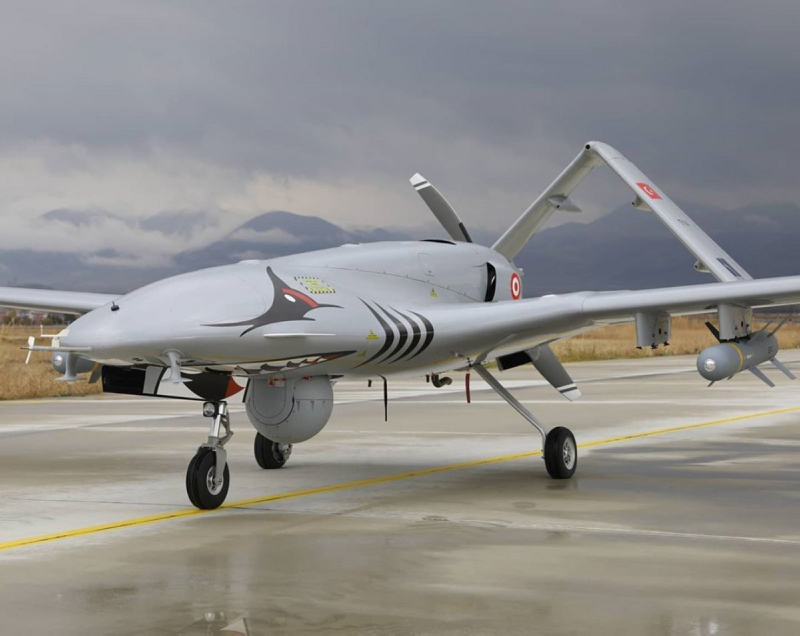
Turkish-made drones, like the TB2, have exemplified this shift. Developed with the aim of making advanced drone capabilities accessible to medium and smaller states, the TB2 has seen action in various conflicts, demonstrating that drones can decisively impact the outcomes of conflicts. Its deployment in Ukraine and Azerbaijan, among others, has highlighted the role of drones in altering the tactical and strategic landscapes of contemporary conflicts.
However, the deployment of drones is not without controversy or consequence. The ethical implications of drone warfare have been a point of significant debate, particularly regarding the human costs of drone strikes and the psychological detachment they can create for operators who may be thousands of miles away from the target.
Furthermore, the adaptation of commercial drone technology for military purposes, as seen with modified consumer drones used by ISIS and other groups, illustrates the ease with which drone technology can be repurposed for combat, raising concerns about the proliferation of drone technology and its accessibility to various actors.
From a strategic perspective, drones have not been universally revolutionary, with their effectiveness varying by context and countered by advancements in air defense systems. The debate among scholars about the impact of drones suggests a consensus that, while drones have significantly influenced some conflicts and are here to stay, they are not a panacea for military dominance.
The effectiveness of drones, such as the TB2 Bayraktar in the Ukraine conflict, has been notable for specific tactical successes but has not rendered traditional military forces obsolete.

Looking to the future, the advent of artificial intelligence (AI) in drone warfare poses new challenges and considerations. The potential for fully autonomous drones, capable of operating without human oversight, has sparked intense debate within international legal and ethical circles.
Concerns center around the need for meaningful human control over lethal autonomous weapons systems (LAWS) to ensure compliance with international humanitarian law and to prevent an erosion of the established norms of warfare.
Proposals for regulating these systems stress the importance of human oversight and the application of international human rights law, even as the technology pushes the boundaries of traditional legal frameworks.
In conclusion, the role and future of military drones in wars are characterized by their significant impact on modern military strategies, the ethical and legal challenges they pose, and the evolving nature of drone technology itself, particularly with the integration of AI. The trajectory of drone warfare will likely continue to be shaped by technological advancements, regulatory efforts, and the ongoing discourse on their ethical and strategic implications.
More articles you may be interested in...
Drones News & Articles
China’s automated logistics network exposes Western regulatory inertia
Drones News & Articles
The hovering sniper: China’s new rifle-drone achieves “deadly precision”
A recent report indicates that Chinese researchers have overcome one of the primary hurdles in robotic warfare: recoil management.
EVTOL & VTOL News & Articles
Sanghajt opens up to drones
From February, drones will be able to fly over designated areas without prior notification, with the local government seeing tremendous...>>>...READ MORE
Drones News & Articles
DJI agras series: a new era in autonomous agricultural robotics
Air taxi News & Articles
The great convergence: standardizing electric flight propulsion
EVTOL & VTOL News & Articles
The tethered sky: Navigating the integration of U-space and energy grids
News & Articles Propulsion-Fuel
Hydrogen’s regional mandate: Retrofitting the future of flight
EVTOL & VTOL News & Articles
Navigating the valley of reality: An AAM sector assessment
The Advanced Air Mobility (AAM) ecosystem has fundamentally shifted, transitioning from a period defined by...>>>...READ MORE
moreDrones News & Articles
Europe’s airspace awakens: The industrial reality of U-space 2.0
News & Articles Propulsion-Fuel
Hydrogen’s verdict: The 2026 propulsion shift redefining regional flight
News & Articles Propulsion-Fuel
Solid-state inflection: The 5-minute charge revolutionizing regional aviation
The nascent electric aviation sector currently faces a defining bottleneck that has less to do...>>>...READ MORE
EVTOL & VTOL News & Articles
The certification cascade: How Part 194 rewrites the rules of vertical flight
Drones News & Articles
Beyond Formula 1: engineering the 657 km/h Peregreen V4 drone record
In the realm of aerodynamics, the quadcopter configuration has traditionally been associated with stability and...>>>...READ MORE
moreEVTOL & VTOL News & Articles
EHang appoints Shuai Feng as chief technology officer
EHang Holdings Limited (Nasdaq: EH) (“EHang” or the “Company”), a global leader in advanced air mobility (“AAM”) technology, today officially announced that the Board of Directors of the Company (the “Board”) has approved and appointed Mr. Shuai Feng as the Chief Technology Officer (“CTO”), effective on January 14, 2026.