

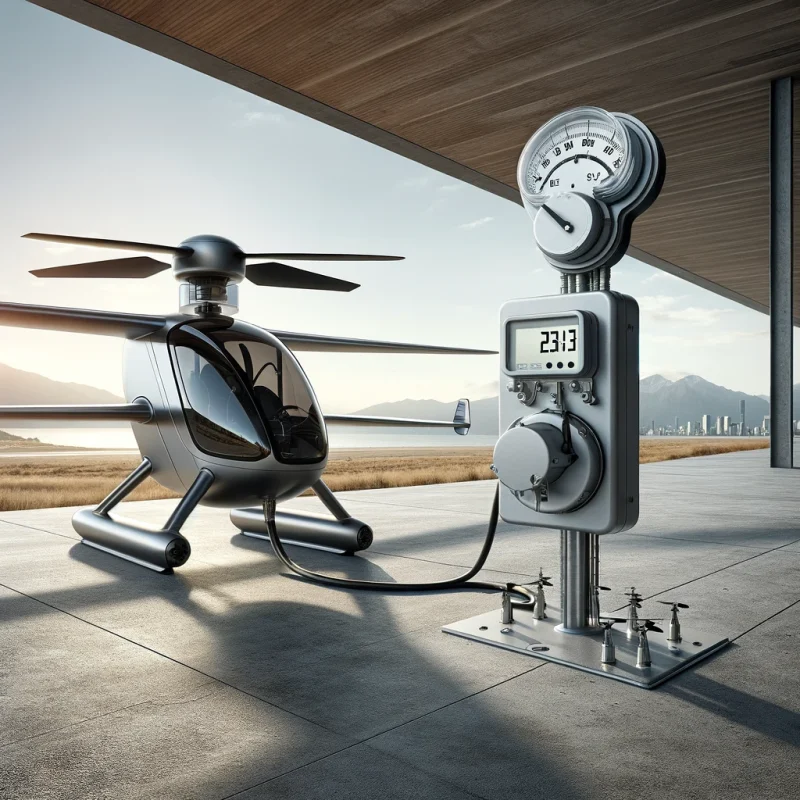
Typically, the energy appetite of an eVTOL ranges between 200 to 300 watt-hours per kilometre (Wh/km). This consumption is influenced by a myriad of factors including the design architecture of the vehicle, its cruising altitude, velocity, and the weight it carries. When juxtaposed with electric cars, which sip energy at a rate of about 150 Wh/km, the stark contrast underscores the more intensive energy needs of aerial travel.

25
Feb
Feb
Building a vertiport, the infrastructure necessary for the operation of electric vertical takeoff and landing (eVTOL) vehicles, involves a complex interplay of design standards, regulatory requirements, and technological considerations. The development of vertiports is a crucial step in advancing urban air mobility (UAM) and integrating eVTOLs into the urban landscape for passenger and cargo transport.

16
Feb
Feb
Electric Vertical Take-Off and Landing (eVTOL) vehicles represent a cutting-edge frontier in the quest for sustainable urban mobility. By harnessing electric propulsion, eVTOLs offer a tantalizing glimpse into a future where the carbon footprint of short-haul air travel and urban commutes is significantly reduced.

12
Feb
Feb
The emergence of electric vertical take-off and landing (eVTOL) vehicles and flying cars represents a significant leap forward in transportation technology, merging the convenience of aviation with the sustainability of electric propulsion. At the heart of these innovative vehicles lies the electric motor, a component whose design and technology play a pivotal role in enhancing their efficiency and feasibility.

10
Feb
Feb
The current state of self-direction, or autonomous navigation, in eVTOLs is a fascinating convergence of aerospace engineering, robotics, and artificial intelligence (AI). The promise of autonomous eVTOLs is not just a reduction in urban congestion but a fundamental change in how we perceive distance and personal mobility.

02
Feb
Feb
The aviation industry stands at the brink of a transformation, with electric vertical takeoff and landing vehicles (eVTOLs) and flying cars poised to redefine urban mobility. These innovations promise not only to cut down on the carbon footprint of traditional aviation but also to significantly reduce noise pollution, offering a cleaner, quieter future. However, the environmental implications of electric aviation are complex, extending well beyond the reduction of emissions during flight.