

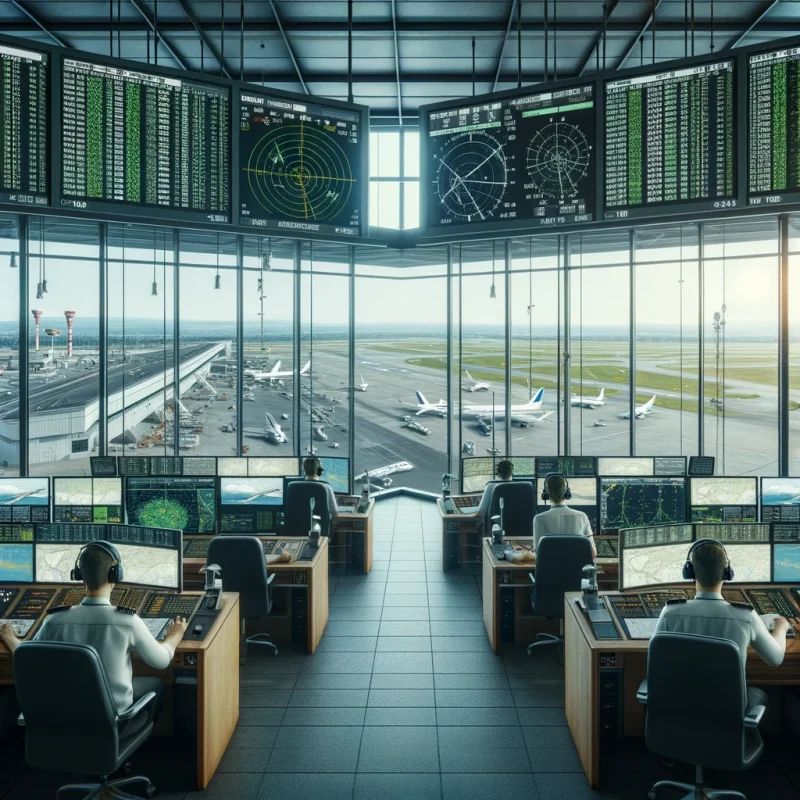
The integration of Urban Air Mobility (UAM) into existing air traffic management (ATM) systems poses significant challenges and opportunities for the aviation industry. As cities worldwide look towards UAM as a solution to reduce congestion and improve transportation efficiency, regulatory bodies such as the Federal Aviation Administration (FAA) and the European Union Aviation Safety Agency (EASA) have initiated steps to develop frameworks that can accommodate both manned and unmanned aerial vehicles safely in urban environments.
FAA’s UTM Pilot Program
The FAA’s UAS Traffic Management (UTM) pilot program is a pivotal initiative aimed at creating a traffic management ecosystem for unmanned aircraft systems (UAS) in the National Airspace System (NAS). This program, which began its trials in 2017, seeks to test operational concepts, including remote identification, dynamic airspace use, and strategic deconfliction to ensure safe and efficient drone operations in urban areas.
The UTM system is designed to be complementary to the traditional ATM system, focusing on low-altitude operations where conventional air traffic control (ATC) services are not provided.
One of the key objectives of the UTM pilot program is to demonstrate how UAS can integrate safely with manned aircraft operations, particularly in densely populated urban areas. For example, the program explores technologies and procedures for managing drone flights in the vicinity of airports, where the risk of interference with manned aircraft is highest.
EASA’s U-space Initiative
Parallel to the FAA’s efforts, EASA has launched the U-space initiative in Europe, with a vision to support the safe and efficient access of drones to airspace. Introduced in 2017, U-space is a set of new services and specific procedures designed to manage UAS operations and all types of other airspace users in a unified, integrated manner.
It relies heavily on digitalization and automation of air traffic management tasks to provide a scalable solution that can grow with the anticipated increase in drone traffic.
U-space is structured around four key services: e-registration (electronic registration of UAS operators), e-identification (electronic identification of UAS), geo-fencing (providing UAS with real-time information on no-fly zones), and traffic information (sharing positions of manned and unmanned aircraft to prevent collisions).
By implementing these services, EASA aims to create an environment where drones can operate safely, without posing a risk to manned aviation or to people on the ground.
Integrating UAM into the existing ATM system involves addressing several challenges, including ensuring the safety of mixed-traffic environments, managing the complexity of urban airspace, and maintaining efficient communication and coordination among a vast number of aerial vehicles. To tackle these issues, innovative solutions such as artificial intelligence (AI) and machine learning are being explored for dynamic airspace management and real-time decision-making.
One illustrative example of innovation in this area is the development of predictive modeling tools that can forecast areas of high traffic density and potential conflict points, allowing for preemptive rerouting of UAS flights to avoid collisions and minimize delays.
Looking Ahead
As UAM continues to advance, the evolution of ATM and UTM systems will be critical in ensuring that urban skies remain safe for all users. The collaborative efforts of regulatory bodies, industry stakeholders, and technology developers are key to creating an integrated airspace management ecosystem that can support the complex operations of the future.
With ongoing trials and research, the FAA’s UTM pilot program and EASA’s U-space initiative are laying the groundwork for a new era of urban air mobility, promising to revolutionize urban transport while maintaining the highest safety standards.
More articles you may be interested in...
Drones News & Articles
China’s automated logistics network exposes Western regulatory inertia
Drones News & Articles
The hovering sniper: China’s new rifle-drone achieves “deadly precision”
A recent report indicates that Chinese researchers have overcome one of the primary hurdles in robotic warfare: recoil management.
EVTOL & VTOL News & Articles
Sanghajt opens up to drones
From February, drones will be able to fly over designated areas without prior notification, with the local government seeing tremendous...>>>...READ MORE
Drones News & Articles
DJI agras series: a new era in autonomous agricultural robotics
Air taxi News & Articles
The great convergence: standardizing electric flight propulsion
EVTOL & VTOL News & Articles
The tethered sky: Navigating the integration of U-space and energy grids
News & Articles Propulsion-Fuel
Hydrogen’s regional mandate: Retrofitting the future of flight
EVTOL & VTOL News & Articles
Navigating the valley of reality: An AAM sector assessment
The Advanced Air Mobility (AAM) ecosystem has fundamentally shifted, transitioning from a period defined by...>>>...READ MORE
moreDrones News & Articles
Europe’s airspace awakens: The industrial reality of U-space 2.0
News & Articles Propulsion-Fuel
Hydrogen’s verdict: The 2026 propulsion shift redefining regional flight
News & Articles Propulsion-Fuel
Solid-state inflection: The 5-minute charge revolutionizing regional aviation
The nascent electric aviation sector currently faces a defining bottleneck that has less to do...>>>...READ MORE
EVTOL & VTOL News & Articles
The certification cascade: How Part 194 rewrites the rules of vertical flight
Drones News & Articles
Beyond Formula 1: engineering the 657 km/h Peregreen V4 drone record
In the realm of aerodynamics, the quadcopter configuration has traditionally been associated with stability and...>>>...READ MORE
moreEVTOL & VTOL News & Articles
EHang appoints Shuai Feng as chief technology officer
EHang Holdings Limited (Nasdaq: EH) (“EHang” or the “Company”), a global leader in advanced air mobility (“AAM”) technology, today officially announced that the Board of Directors of the Company (the “Board”) has approved and appointed Mr. Shuai Feng as the Chief Technology Officer (“CTO”), effective on January 14, 2026.