


In a remarkable stride forward for agricultural technology, Pyka, a trailblazer in autonomous electric aviation, has introduced its next-generation marvel, the Pelican 2. This cutting-edge aircraft, unveiled in early 2025, is poised to transform the landscape of crop protection with its unparalleled capabilities.
Related articles
- The world’s largest unmanned electric cargo plane
- The role of China and Asia in the modern electric aircraft industry (2025)
- Which countries are investing the most in eVTOL development?
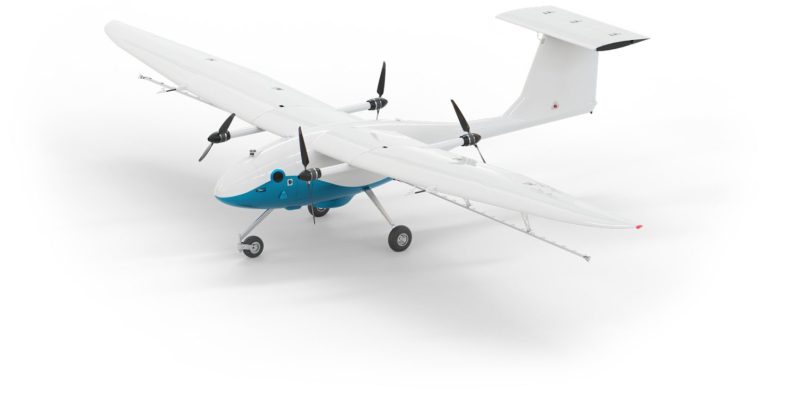
(photo: flypyka.com)
Boasting a hefty payload capacity of 300 liters and an impressive work rate of up to 90 hectares per hour, the Pelican 2 stands as the largest and most productive autonomous electric agricultural aircraft to date. Its debut marks a significant leap in the quest to marry efficiency with sustainability in modern farming.
The significance of this development extends beyond its technical prowess. The Pelican 2 has earned Federal Aviation Administration (FAA) approval for commercial operations in the United States, a testament to its reliability and safety.
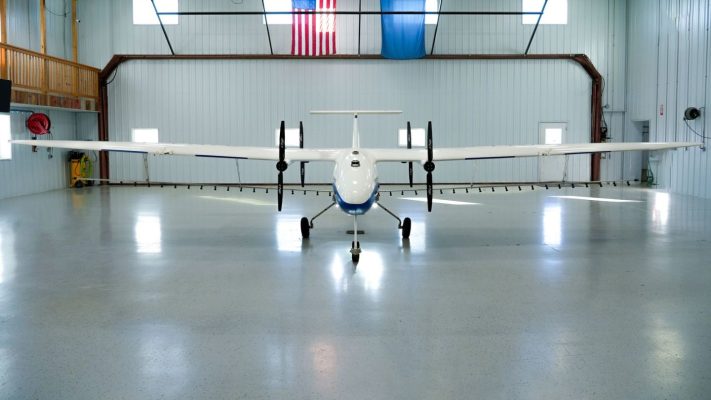
(photo: flypyka.com)
This milestone, achieved in February 2025, marks the second time Pyka has secured such a groundbreaking authorization for its uncrewed aerial systems (UAS), following the original Pelican’s approval in 2023. Surpassing its predecessor, the Pelican 2 now holds the title of the largest UAS ever cleared by the FAA for commercial use, cementing Pyka’s dominance in the realm of heavy-lift aerial solutions.
Meanwhile, the company has also clinched a landmark order for 20 aircraft in Brazil, amplifying its influence in one of the globe’s agricultural powerhouses as of March 22, 2025.
A new benchmark in agricultural aviation
Pyka’s journey with the Pelican 2 is not merely a tale of technological innovation but a response to the pressing needs of contemporary agriculture. Since launching its first commercial autonomous sprayer in 2021, the company has relentlessly refined its designs to tackle the multifaceted challenges faced by farmers worldwide.
The Pelican 2 emerges as a culmination of these efforts, integrating advanced features that elevate both efficiency and environmental stewardship. Its arsenal includes a robust four-motor electric propulsion system, a widened 18-meter spray swath, and sophisticated LIDAR and RADAR technologies for fully autonomous operation, day or night.
What sets the Pelican 2 apart is its meticulous engineering. The aircraft’s 300-liter payload capacity reduces the frequency of refills, enabling longer missions an invaluable asset for large-scale operations. Its dynamic droplet size adjustment, facilitated by hydraulic nozzles and Pyka’s proprietary electric rotary atomizers, optimizes chemical application while minimizing drift, a common issue that can harm surrounding ecosystems.
Furthermore, the inclusion of five hot-swappable lithium-ion battery packs ensures uninterrupted 24/7 functionality, a feature that aligns with the demands of intensive farming schedules. Priced at a starting point of $550,000, the Pelican 2 is now available for purchase, offering farmers a tangible pathway to modernize their operations.
What is LIDAR and why does it matter?
The implications of these advancements are profound. According to a 2024 report by the Food and Agriculture Organization (FAO), global food production must increase by 60% by 2050 to meet rising demand. Innovations like the Pelican 2 address this challenge by enhancing productivity while reducing reliance on fossil fuels a critical step toward sustainable agriculture.
Pyka’s electric propulsion system eliminates emissions associated with traditional piloted aircraft, which, as noted by the National Transportation Safety Board (NTSB), were involved in 54 agricultural aviation accidents in 2020 alone, including 13 fatalities.
Expanding horizons: Brazil and beyond
Pyka’s ambitions extend far beyond U.S. borders, with Brazil emerging as a pivotal frontier. The company’s recent order for 20 Pelican 2 aircraft in this agricultural titan underscores its growing global footprint. Brazil, which ranks among the world’s top exporters of soybeans, corn, and sugar, cultivated over 83 million hectares of farmland in the 2023-2024 season, per Brazil’s Ministry of Agriculture.
The deployment of these autonomous sprayers promises to revolutionize large-scale aerial application, offering Brazilian farmers a tool to boost efficiency and slash operational costs.
This move builds on Pyka’s established presence in Latin America. In 2023, the company partnered with Dole in Honduras, deploying the original Pelican to enhance banana crop protection. The operation demonstrated significant improvements in precision and reduced chemical waste, a success that paved the way for further expansion.
Fast forward to July 2024, and Pyka inked a transformative deal with SLC Agrícola, one of Brazil’s largest agribusinesses, to supply Pelican aircraft for widespread use. This agreement reflects a growing trust in autonomous technology among major producers, who see it as a means to address labor shortages and rising costs.
Meanwhile, in the United States, Pyka has solidified its foothold by delivering aircraft to Heinen Brothers Agra Services, a leading North American aerial application provider, following its initial FAA certification in 2023. This partnership exemplifies the practical application of Pyka’s technology in diverse agricultural contexts, from specialty crops to expansive row plantations.
As of March 2025, the Pelican 2’s capabilities are set to be showcased at the World Ag Expo in Tulare, California, from February 11-13, where it has already earned a spot among the Top-10 New Product Award winners an accolade that highlights its industry impact.
Addressing global challenges
The Pelican 2 arrives at a critical juncture. With the global population projected to reach 9.7 billion by 2050, per the United Nations, the pressure on agricultural systems is intensifying. Traditional methods, reliant on piloted aircraft or ground-based equipment, often struggle to keep pace with this demand, hampered by high costs, environmental drawbacks, and safety risks. Pyka’s autonomous solution offers a compelling alternative, blending precision with scalability.
Consider the case of banana farming in Honduras. A 2023 study conducted with Dole revealed that the Pelican reduced fungicide use by 15% compared to conventional methods, thanks to its precise spray patterns. This not only lowered costs but also mitigated the ecological footprint a win-win for producers and the planet.
This feature allows the Pelican 2 to alter the size of spray droplets in real time, tailoring them to specific crops or weather conditions. Smaller droplets might be used for delicate plants to ensure even coverage, while larger ones could be deployed in windy conditions to prevent drift. It’s a smart way to maximize chemical efficiency and minimize waste.Similarly, in Brazil, early trials with SLC Agrícola in 2024 showed the Pelican 2 covering 90 hectares per hour with a 20% reduction in fuel-related expenses, as it sidesteps the need for gasoline-powered planes. These real-world examples underscore the aircraft’s potential to reshape farming practices.
Scientific backing reinforces these outcomes. A 2025 analysis in the Journal of Agricultural Engineering found that autonomous UAS like the Pelican 2 can reduce pesticide drift by up to 30% compared to traditional aircraft, thanks to advanced sensors and adjustable spray systems.
This precision aligns with broader trends in precision agriculture, a field projected to grow to a $12.9 billion market by 2027, according to MarketsandMarkets.
A vision for the future
Pyka’s trajectory with the Pelican 2 is emblematic of a broader shift toward automation and electrification in aviation. Since its inception, the company has amassed nearly five years of commercial experience, honing its technology through real-world feedback from growers.
“Our customers have been instrumental in shaping this aircraft,” notes Volker Fabian, Pyka’s Chief Commercial Officer. “
It’s designed to exceed expectations in spray quality, reliability, and ease of use attributes unmatched by any rival system.
The Pelican 2’s debut is more than a product launch; it’s a statement of intent. As food security becomes an ever-pressing concern, Pyka is positioning itself at the forefront of a revolution, delivering tools that promise efficiency, cost savings, and sustainability. Its blend of cutting-edge engineering and practical application offers a glimpse into the future of farming one where technology and nature work in harmony to feed a growing world.
Source: flypyka.com
More articles you may be interested in...
Drones News & Articles
China’s automated logistics network exposes Western regulatory inertia
Drones News & Articles
The hovering sniper: China’s new rifle-drone achieves “deadly precision”
A recent report indicates that Chinese researchers have overcome one of the primary hurdles in robotic warfare: recoil management.
EVTOL & VTOL News & Articles
Sanghajt opens up to drones
From February, drones will be able to fly over designated areas without prior notification, with the local government seeing tremendous...>>>...READ MORE
Drones News & Articles
DJI agras series: a new era in autonomous agricultural robotics
Air taxi News & Articles
The great convergence: standardizing electric flight propulsion
EVTOL & VTOL News & Articles
The tethered sky: Navigating the integration of U-space and energy grids
News & Articles Propulsion-Fuel
Hydrogen’s regional mandate: Retrofitting the future of flight
EVTOL & VTOL News & Articles
Navigating the valley of reality: An AAM sector assessment
The Advanced Air Mobility (AAM) ecosystem has fundamentally shifted, transitioning from a period defined by...>>>...READ MORE
moreDrones News & Articles
Europe’s airspace awakens: The industrial reality of U-space 2.0
News & Articles Propulsion-Fuel
Hydrogen’s verdict: The 2026 propulsion shift redefining regional flight
News & Articles Propulsion-Fuel
Solid-state inflection: The 5-minute charge revolutionizing regional aviation
The nascent electric aviation sector currently faces a defining bottleneck that has less to do...>>>...READ MORE
EVTOL & VTOL News & Articles
The certification cascade: How Part 194 rewrites the rules of vertical flight
Drones News & Articles
Beyond Formula 1: engineering the 657 km/h Peregreen V4 drone record
In the realm of aerodynamics, the quadcopter configuration has traditionally been associated with stability and...>>>...READ MORE
moreEVTOL & VTOL News & Articles
EHang appoints Shuai Feng as chief technology officer
EHang Holdings Limited (Nasdaq: EH) (“EHang” or the “Company”), a global leader in advanced air mobility (“AAM”) technology, today officially announced that the Board of Directors of the Company (the “Board”) has approved and appointed Mr. Shuai Feng as the Chief Technology Officer (“CTO”), effective on January 14, 2026.