

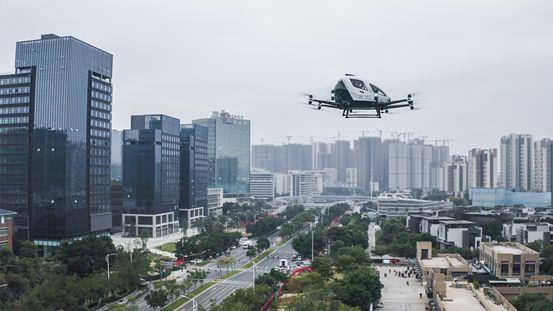
GUANGZHOU, China, May 20, 2024 – EHang Holdings Limited (Nasdaq: EH), a global leader in Urban Air Mobility (UAM) technology, announced impressive financial results for Q1 2024, achieving substantial revenue growth and critical operational milestones.

14
May
May
As urban areas continue to grow and transportation infrastructure becomes increasingly congested, the need for innovative solutions to urban mobility has never been more pressing. One such solution is the advent of electric vertical takeoff and landing (eVTOL) aircraft. These futuristic vehicles promise to revolutionize the way we travel within cities, offering a faster, more efficient, and environmentally friendly alternative to traditional ground transportation. However, as with any new technology, safety remains a paramount concern.

08
May
May
In recent years, the concept of urban air mobility has captured the collective imagination, conjuring visions of futuristic cities where flying cars glide effortlessly over traffic-clogged streets. At the heart of this vision lies the rapid development of electric Vertical Take-Off and Landing (eVTOL) aircraft, a technology that promises to fundamentally transform how people and goods traverse urban landscapes.

04
May
May
The pace of eVTOL adoption will vary largely based on existing technological infrastructure. Developed nations, already at the forefront of technological sophistication, have the advantage of advanced transportation systems that can readily support eVTOL operations. These countries boast an environment conducive to rapid adoption due to higher government investments in vertiports, charging stations, and air traffic management systems.

28
Apr
Apr
The European Union, through the efforts of the European Union Aviation Safety Agency (EASA), is pioneering the integration of advanced aerial technologies into urban settings. This progressive stance is epitomized by the establishment of the U-space regulatory framework.

19
Apr
Apr
In the burgeoning era of urban air mobility (UAM), the European Union stands at the forefront of establishing a regulatory framework for air taxis, electric vertical takeoff and landing vehicles (eVTOLs), and flying cars. The core of these regulations revolves around safety, environmental sustainability, and seamless integration into existing urban infrastructures.